What Should You Consider Before Purchasing Riverside Property in the Sunshine State?


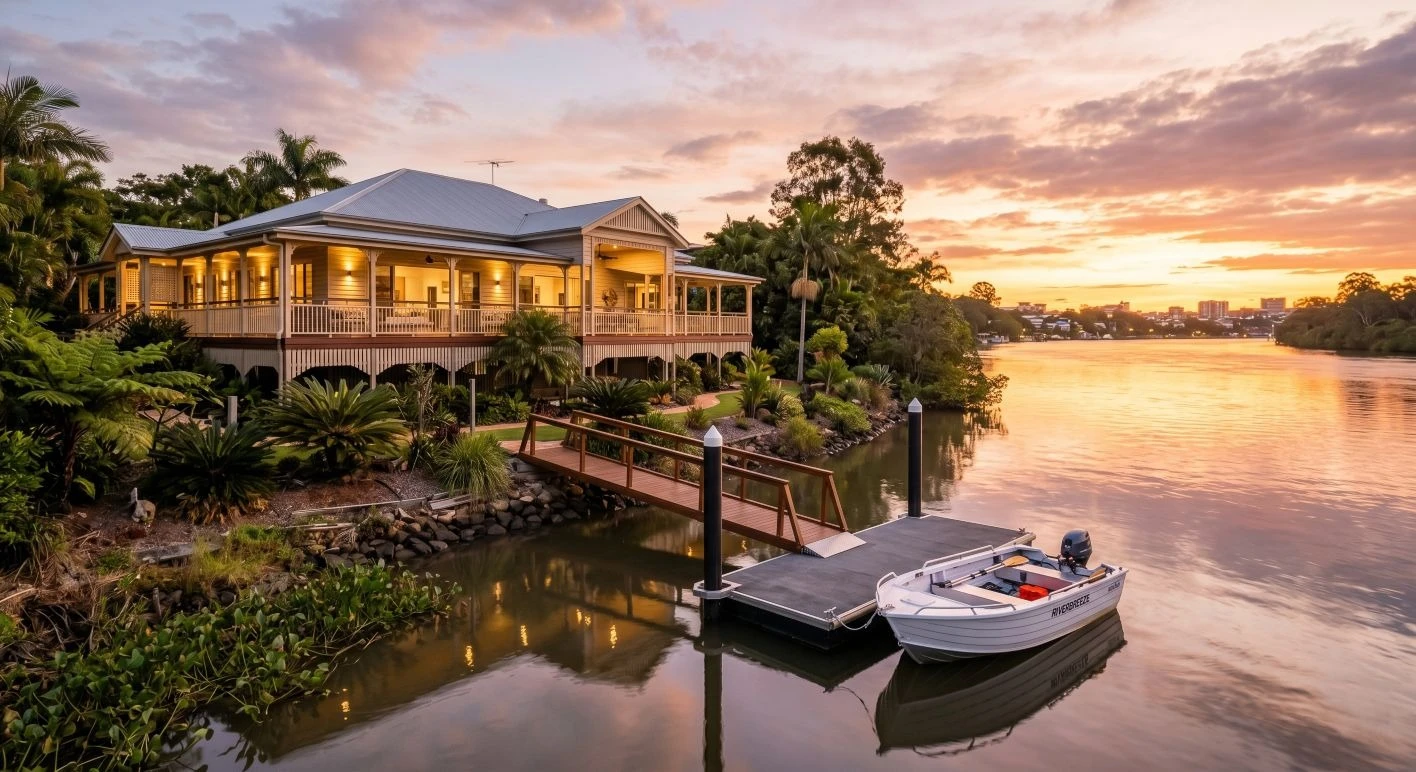
Let’s get one thing straight. Buying a riverfront block in Queensland is a romantic idea right up until the Brisbane River is sitting in your living room. You see the glossy real estate listings. A private pontoon. A tinny tied up. Sunset beers looking over the water. Sounds brilliant. But the reality is often a lot wetter and a hell of a lot more expensive.
I see punters make the same mistake every single year. They buy with their hearts instead of their heads. The last time I dealt with a client who bought a bargain riverfront place in Chelmer without doing the groundwork, it cost them an absolute fortune. They ignored the obvious signs. They ignored the flood maps. They just saw the water views and threw their cash at the vendor. Six months later, they were spending weekends shoveling mud out of their downstairs rumpus room. Don’t be that person.
The Flood Map Reality Check
Floods happen. If you buy near the water in the Sunshine State, you will deal with high water eventually. The 2011 and 2022 floods taught us brutal lessons. In 2022 alone, thousands of homes went under, and some properties lost meters of their backyard to the river.
You can’t trust a real estate agent to give you the unvarnished truth about flood risk. Their job is to sell the house. Your job is to protect your bank account. Go straight to the local council website and pull the flood awareness maps. Look at the historical peaks. Look at the projected overland flow paths.
If you can’t decipher the data yourself, get a professional in your corner. Trying to navigate this market alone is a fool’s errand. Hiring a reliable buyers advocate Brisbane is the smartest money you can spend. They know which pockets of the river actually drain away and which ones turn into toxic mud baths. They look at the topography, the street drainage, and the historical sales data. A good one will outright refuse to let you buy a lemon. They strip the emotion out of the transaction. You need someone who looks at a house and sees the drainage issues, not the fancy staging furniture.
The Dirt Beneath Your Feet
Water moves dirt. It’s a simple law of physics. When you own property right on the edge of a tidal river or a fast-flowing creek, your land is under constant attack. Every tide pulls a little more of your investment away.
Before you even think about putting down a deposit, you need a geotechnical engineer to look at that soil. You need to know what you are actually buying. Sometimes the fix is relatively straightforward. You might just need to bring in heavy machinery and pump the bank full of top-tier soil stabilisation products to stop the erosion and bind the earth back together. Other times, the land is completely unviable. Those products work miracles on loose banks, but you need to factor that cost into your purchase price from day one. Don’t wait until your backyard literally slides into the river to fix it.
Council Red Tape and Retaining Walls
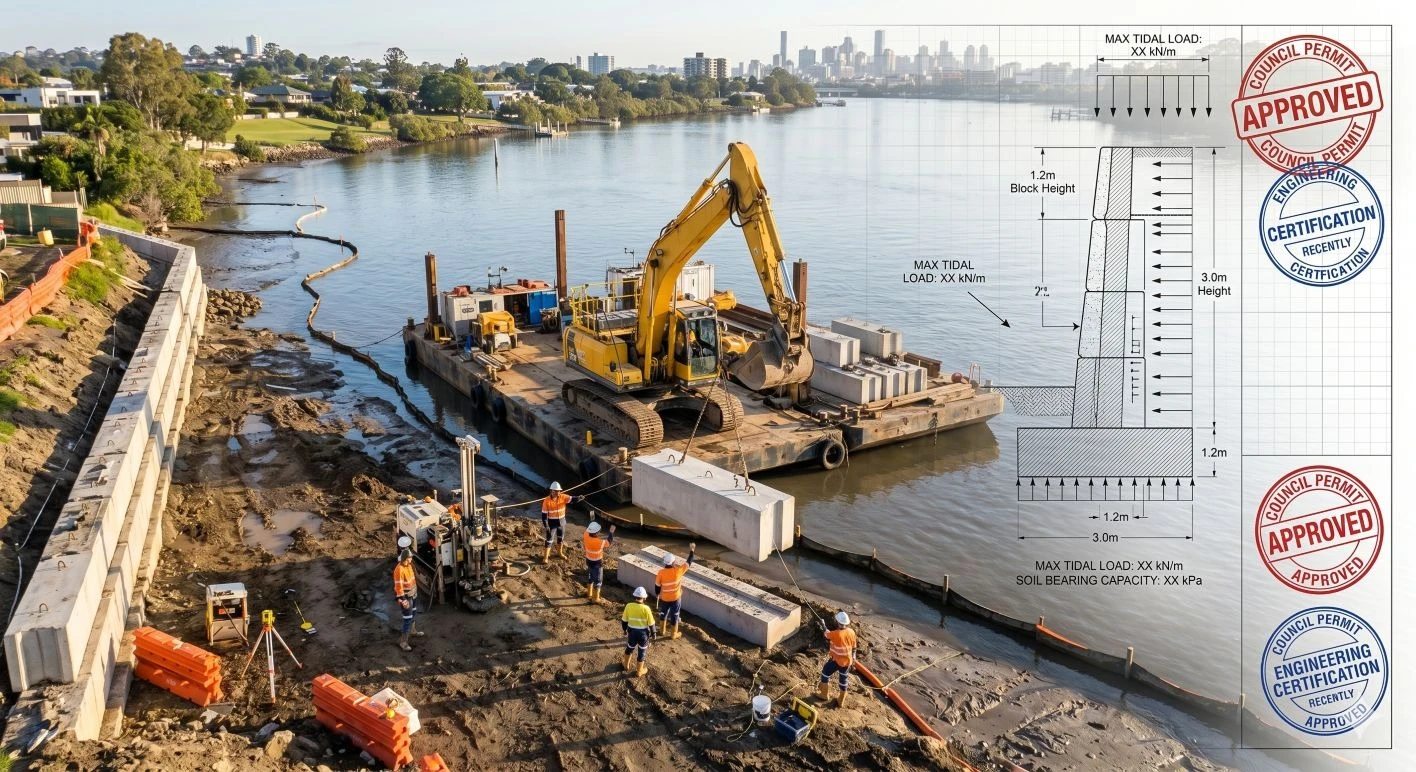
Building or repairing anything on a riverbank triggers a mountain of council paperwork. You can’t just call a mate with an excavator and start pushing dirt around. Local councils strictly protect the riparian zone.
Want a pontoon? Get ready for permits. Need to fix that crumbling retaining wall? You need engineering sign-off, council approval, and environmental clearances. The red tape is exhausting. It takes months.
There are strict environmental protection laws. You must use approved methods and materials. Factor these compliance costs into your budget immediately. If the property has existing retaining walls or pontoons, demand to see the council approvals during the settlement period. If they are unapproved structures, the council will force you to tear them down at your own expense. You buy the property, you buy the problems.
The Insurance Nightmare
Let’s talk about the elephant in the room. Insurance premiums for riverfront properties are out of control. After the 2022 weather events, some premiums jumped by three hundred percent overnight. A standard policy that used to cost three grand a year suddenly costs twelve grand. Some places became entirely uninsurable.
Insurance companies aren’t charities. They run the numbers. If your property sits in a high-risk flood zone, they will make you pay for the privilege. They don’t care about your sunset views.
Don’t sign a contract without getting a formal insurance quote first. Forget those online estimators. Call a broker. Give them the exact address. Ask for a hard quote. You might find that the property is completely uninsurable for flood damage. Can your mortgage handle a total loss? If the bank finds out the property is uninsurable, they will pull your finance anyway. Get it in writing before you go unconditional.
Maintenance Never Sleeps
Living near the water accelerates wear and tear on absolutely everything. Salt air, constant moisture, and humidity destroy cheap building materials. It’s relentless.
Steel rusts faster. Paint peels sooner. Timber decks rot if you don’t stay on top of the oiling. You need to use marine-grade stainless steel for every exterior fitting. It costs three times as much, but it’s the only thing that survives. If you try to save a few bucks on standard galvanised screws, you will be replacing them in twelve months.
If you buy a fixer-upper on the river, don’t buy cheap fittings from the local hardware store. They will look terrible in six months. Spend the money upfront on quality gear. Keep the gutters clean so water moves away from the house during downpours. Treat the property like a boat. It needs constant, proactive maintenance.
Are you ready for the reality of riverfront living? It’s a lifestyle choice that requires deep pockets, tough decisions, and a lot of patience. If you do your homework, manage the risks, and protect the land, it’s a brilliant way to live. Buy smart. Do the boring research. Keep your eyes wide open.