The Road Bike Upgrade That Can Transform Speed, Handling, and Ride Feel


Every rider eventually reaches a point where the bike itself starts to feel like the limiting factor rather than fitness or technique. You’re pedaling well, your form is solid, and yet something about the ride still feels like it’s holding you back — a little heavier under acceleration than it should be, a little less confident through fast corners, a little more road buzz than seems necessary. More often than not, the answer isn’t a new frame or a dramatic overhaul. It’s the wheels.
A genuinely well-chosen road bike wheel upgrade touches three distinct parts of the riding experience at once — how quickly the bike responds to effort, how confidently it handles through corners and in wind, and how the road actually feels transmitted back through the bike. Most riders expect an upgrade to improve one of these. Fewer expect all three to shift meaningfully with a single component change, but that’s exactly what happens when the upgrade is chosen well.
This piece breaks that transformation down into its three real parts — speed, handling, and ride feel — and looks at what’s actually happening mechanically in each case, so you know precisely what you’re paying for rather than just trusting a marketing promise.
Speed: Where the Gains Are Real and Where They’re Modest
Wheels are rotating, unsprung mass, which means every gram removed matters more for acceleration than the same gram removed from the frame or almost anywhere else on the bike. This is the most intuitive part of a road bike wheel upgrade — lighter wheels genuinely do accelerate faster, and the difference is often noticeable within the first few pedal strokes out of a stop or the first surge of a group ride.
Aerodynamic gains work differently. They matter more at sustained higher speeds than in short accelerations, which is why rim depth becomes relevant here — a deeper, more aerodynamically shaped rim reduces drag more effectively at speed than a shallow one, though the benefit only really shows up once you’re moving fast enough for aerodynamics to dominate over rolling resistance and weight.
Why Speed Gains Aren’t Purely About the Number on the Scale
It’s tempting to judge a wheel upgrade purely by how many grams it saves, but that’s an incomplete picture. A slightly heavier wheel with better aerodynamic shaping can outperform a lighter, less aerodynamic one at real riding speeds on flatter terrain — which is exactly why the best upgrades are chosen based on your typical riding conditions, not a single spec in isolation.
Handling: The Upgrade Most Riders Don’t See Coming
This is where a wheel upgrade often surprises riders the most, because handling improvements aren’t usually part of the sales pitch the way speed and weight are. A higher-quality wheelset typically means better-built rims with more consistent tension, better hub bearings with less play, and rim geometry engineered specifically for predictable behavior in crosswinds — all of which add up to a bike that simply tracks and corrects more confidently than it did before.
Rim depth plays a direct role here too, and it cuts both ways. A deeper rim improves aero performance but increases sensitivity to crosswinds, meaning the handling upgrade you experience depends heavily on choosing a depth that actually matches your typical riding conditions rather than chasing the deepest option available regardless of context.
Bearing Quality: The Quiet Handling Upgrade Nobody Talks About
Better sealed bearings reduce friction and maintain consistent performance longer than lower-quality alternatives, which contributes to a smoother, more predictable feel through corners that’s easy to underestimate until you’ve actually felt the difference. It’s a less glamorous upgrade than rim depth or weight, but it’s a real contributor to the overall handling improvement a quality wheelset delivers.
Ride Feel: The Hardest Improvement to Quantify, the Easiest to Notice
Ride feel is the part of a wheel upgrade that resists a clean spec-sheet number but is often the improvement riders describe most vividly afterward. It comes down to how effectively the wheel absorbs road vibration and how supported the tire feels through the rim, both of which are heavily influenced by rim width and how well it’s matched to your tire choice.
A properly matched, wider internal rim width supports tires in a rounder, more stable profile, which allows for slightly lower tire pressure without sacrificing stability — and that lower pressure, within a safe range, is one of the most direct ways to reduce road buzz transmitted into your hands and seat over a long ride.
A Look at What a Genuine Upgrade Actually Delivers
For riders chasing real aerodynamic gain without giving up too much handling composure, the TOCCAY 50mm carbon wheelset demonstrates how these three factors — speed, handling, and ride feel — get balanced deliberately in a single build, offering a middle-depth profile designed to deliver meaningful aero benefit while remaining confident and predictable across a wide range of real-world conditions.
Seeing the Full Transformation in a Single Wheelset
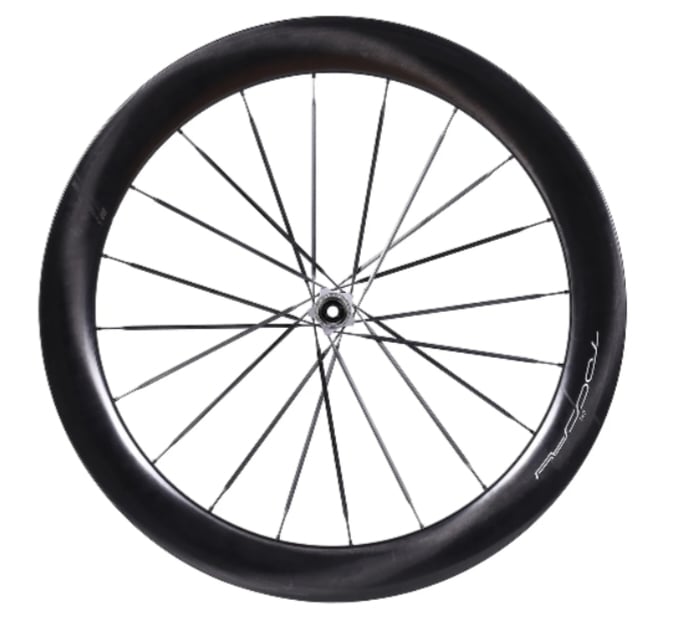
The AERO-60 Ghost Wheelset CARBON illustrates how all three elements — speed, handling, and ride feel — come together in a deeper, more aggressively speed-oriented build. Built on a Toray T800 + T1100 carbon layup, it features a 60mm rim depth, a 25mm inner / 33mm outer rim width, and a wheelset weight of roughly 1240g, backed by a 36-month limited warranty and available with either Shimano HG or SRAM XDR freehub options. Riders who move to this depth from a shallower setup typically describe exactly the transformation this article has walked through — a noticeably quicker feel under acceleration on flatter terrain, a real aerodynamic benefit sustained at higher speeds, and a smoother, more supported ride thanks to the properly matched rim width working with modern tubeless tire setups.
Making Sure the Upgrade Actually Delivers What You’re Paying For
None of these gains materialize automatically just from buying a better wheelset. Tire choice needs to match the rim’s internal width to get the ride-feel benefit. Tubeless setup, if you’re running it, needs to be done properly with correct sealant and pressure to deliver its full comfort and puncture-resistance advantage. And compatibility — rotor mounting type, axle standard, freehub body — needs to be confirmed against your current bike before ordering, since a mismatch here undermines the entire upgrade regardless of how well-engineered the wheel itself is.
Why the Small Details Determine Whether You Feel the Difference
A technically excellent wheelset paired with mismatched tires, incorrect pressure, or a rushed tubeless setup will underdeliver on all three fronts — speed, handling, and ride feel — even though the wheel itself is fully capable of providing all of them. Getting the surrounding details right is what actually determines whether you feel the full transformation this kind of upgrade is capable of delivering.
Final Thoughts: One Upgrade, Three Real Improvements
A genuinely well-chosen wheel upgrade is rare among cycling components in how directly it touches speed, handling, and ride feel all at once, rather than improving one dimension at the expense of another. Understanding what’s actually happening mechanically in each category — weight and aerodynamics for speed, build quality and rim depth for handling, rim width and tire matching for ride feel — lets you choose an upgrade based on what you actually need rather than a single flashy spec.
Get the choice right, match it properly to your bike and riding style, and set it up correctly once it arrives, and a wheel upgrade delivers exactly what most riders hope for from a much bigger, more expensive change: a bike that finally feels like it’s working with you instead of quietly holding you back.