
Shielding the Enterprise: Why Cybersecurity Must Be at the Core of Your Managed IT Strategy
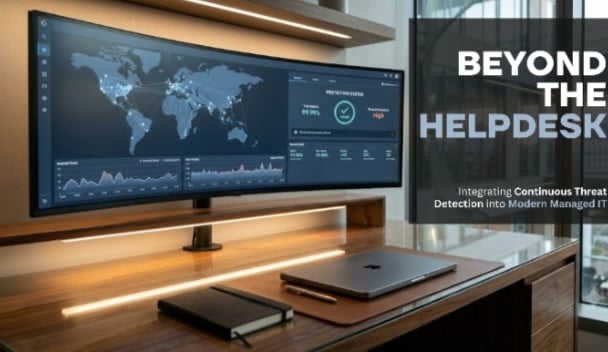


For decades, corporate information technology was viewed through a largely operational lens. The primary goal of the internal IT department or external technology partner was simple: keep the servers humming, ensure employee workstations connected smoothly to the network, fix printer jams, and reset forgotten passwords as quickly as possible. Technology was treated as a digital utility much like electricity or plumbing, designed to facilitate daily business workflows without demanding excessive strategic attention from the executive board.
That operational model is dangerously obsolete. In today’s hyper-connected, digital-first business environment, the threat landscape has evolved at a blistering pace. Cyberattacks are no longer random nuisances launched by isolated hackers; they are highly organized, industrialized operations driven by sophisticated criminal syndicates and state-sponsored actors. When a data breach or ransomware event paralyzes a business, the resulting damage extends far beyond temporary inconvenience. It threatens corporate survival, ruins hard-earned brand reputation, and incurs catastrophic financial penalties. For modern enterprises, treating cybersecurity as a secondary add-on is no longer an option. Security must be woven directly into the fabric of your daily managed IT framework.
The Dangerous Illusion of Standard IT Support
Many organizations make the fatal mistake of assuming that having a functional IT helpdesk equates to being secure. They believe that regular software updates, basic antivirus subscriptions, and a standard firewall are enough to keep modern threats at bay. Unfortunately, standard IT support is built for operational efficiency, not adversarial defense.
Traditional IT management focuses on uptime and accessibility, making systems easy for employees to access from anywhere at any time. Cybersecurity, by contrast, focuses on controlled access, rigorous verification, and zero-trust principles. When an IT provider prioritizes convenience over security, they inadvertently create vulnerabilities. Cybercriminals actively exploit these gaps, bypassing legacy security tools within minutes. To protect sensitive corporate data and ensure business continuity, organizations must partner with advanced providers who treat security and infrastructure management as a single, unified discipline.
The Escalating Stakes of Modern Cyber Threats
The nature of corporate risk has shifted dramatically over the past few years. Ransomware strains now feature multi-tiered extortion tactics, threatening not only to encrypt local infrastructure but also to leak proprietary intellectual property, customer records, and confidential financial documents onto the dark web. Business email compromise campaigns use advanced artificial intelligence to mimic executive communication patterns, tricking finance departments into wiring millions of dollars to fraudulent accounts.
Furthermore, regulatory compliance has become a minefield. Governments and international bodies enforce strict data privacy laws that mandate rigorous protective measures and rapid breach notification protocols. A single security failure can trigger punishing regulatory fines, protracted legal battles, and permanent loss of customer trust. In this high-stakes environment, risk management officers and CISOs need absolute confidence that their technological infrastructure is monitored, defended, and resilient around the clock.
Embedding Continuous Monitoring and Threat Detection
Reactive security is dead. Waiting for an alert to pop up on a screen after malware has already infiltrated a network guarantees disaster. Modern defense requires continuous, proactive monitoring that sweeps network perimeters, endpoints, and cloud environments 24 hours a day, 365 days a year.
Top-tier technology partners utilize advanced security information and event management systems, backed by artificial intelligence and machine learning algorithms, to detect anomalous behavior before it manifests into a full-scale breach. If an employee credential is stolen and used to log into corporate servers from an unusual geographic location at three in the morning, automated systems flag and isolate the threat instantly. This relentless vigilance ensures that minor security anomalies are neutralized before human adversaries can establish a permanent foothold in the network.
Aligning Operational Efficiency with Risk Mitigation
When evaluating technology partners, forward-thinking enterprises look for top managed IT services that seamlessly integrate comprehensive security protocols, disaster recovery planning, and compliance frameworks directly into their core service agreements. Instead of managing a fragmented collection of point solutions and third-party vendors, organizations benefit immensely from a unified framework where infrastructure management and defense operate hand in hand.
This integrated approach eliminates the communication gaps that often emerge when separate teams handle IT operations and cybersecurity. When every server update, new user onboarding, and cloud migration is vetted through a rigorous security lens, the entire organization becomes inherently more resilient. System performance and robust protection reinforce one another rather than competing for budget and attention.
Disaster Recovery and Business Continuity Planning
No matter how advanced your defensive walls are, 100 percent security is an impossible myth. A truly resilient enterprise must operate under the assumption that a breach or system failure could occur at any moment. The true test of a managed IT strategy is not just how well it prevents attacks, but how rapidly and seamlessly the business can recover when the unexpected happens.
Comprehensive disaster recovery planning involves much more than simply backing up files to an external hard drive once a week. It requires automated, immutable backups stored offsite, rigorous recovery time objective testing, and clear incident response playbooks. If ransomware locks down your primary database, your IT partner should be able to restore operations from a clean, verified backup within hours rather than weeks, minimizing financial losses and preventing reputational damage.
Building a Culture of Security Awareness
Technology alone can never completely solve the cybersecurity challenge. Human error remains one of the most significant vulnerabilities in any corporate ecosystem. A single employee clicking on a convincing phishing link can compromise an entire enterprise network, bypassing millions of dollars worth of perimeter defense software.
A mature managed IT and security strategy incorporates comprehensive, ongoing employee education and simulated phishing tests. When staff members understand how to recognize social engineering tactics and feel empowered to report suspicious activity without fear of reprisal, they transform from the weakest link in your defense chain into an active, vigilant human firewall. Security awareness must be cultivated as an ongoing organizational habit rather than an annual compliance checkbox.
The Role of the CISO in Strategic Decision-Making
For operations directors and Chief Information Security Officers, aligning IT infrastructure with corporate risk strategy is a daily balancing act. Securing board-level buy-in for cybersecurity investments requires articulating risk in business terms rather than technical jargon.
When cybersecurity is embedded directly into the managed IT framework, it provides clear, quantifiable visibility into enterprise risk posture. CISOs can demonstrate how proactive threat hunting, vulnerability patching, and compliance guardrails protect corporate revenue streams and customer trust. This transparency elevates the IT and security function from a cost center to a vital strategic driver of business growth and stability.
Conclusion: Securing Your Enterprise Future
The modern digital landscape is fraught with sophisticated risks, but it also offers unprecedented opportunities for businesses that manage their technology intelligently. Relying on outdated, reactive IT support leaves your enterprise exposed to catastrophic vulnerabilities that can derail years of hard work in a matter of minutes.
By shifting toward an integrated model where robust cybersecurity, continuous monitoring, disaster recovery, and compliance guardrails are built directly into your daily managed IT strategy, you protect your assets, empower your workforce, and secure your long-term operational future. Evaluate your current technology partnerships, eliminate the artificial silos between IT operations and security, and build an enterprise defense built to withstand the realities of the modern threat landscape.
Steven Lagrimas is a freelance writer specializing in STEM, business, health, politics, and the social sciences. His work explores the intersection of society, governance, innovation, and emerging global trends shaping communities and industries today.