
How All-on-Four Implants Enhance Denture Fit and Comfort
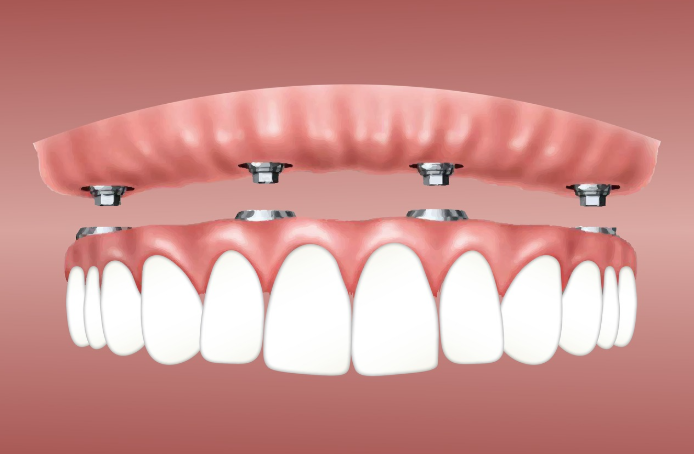


According to the American Dental Association’s 2023 prosthetics survey, nearly 40% of adults over 65 struggle with traditional denture stability — yet most don’t realize that implant-supported alternatives can eliminate the slipping, sore spots, and dietary restrictions that define their daily experience. As dental implant technology advances and success rates climb above 95% for properly placed systems, the gap between what’s possible and what patients actually receive continues to widen. For the millions of Americans dealing with ill-fitting dentures or facing full-mouth tooth loss, understanding how All-on-Four implants fundamentally solve the stability problem could transform not just their ability to eat comfortably, but their confidence in social situations and overall quality of life. The difference lies in how four strategically placed implants create a foundation that works with your jawbone rather than simply resting on top of it.
How All-on-Four Implants Improve Denture Fit and Function
The fundamental problem with traditional dentures isn’t just comfort — it’s physics. Removable dentures rely entirely on suction and compression against your gum tissue, which means every bite creates lateral forces that work to dislodge them. Your jawbone, meanwhile, begins shrinking the moment your natural teeth are removed, gradually reducing the ridge that dentures depend on for retention.
All-on-Four implants solve this through osseointegration — the process where titanium implants fuse directly with your jawbone tissue. Four implants placed at precise angles (the back two tilted up to 45 degrees to maximize bone contact) create anchor points that distribute chewing forces into the bone rather than onto soft tissue. This isn’t just more stable; it actually stimulates the jawbone to maintain its density, preventing the continued bone loss that makes traditional dentures progressively less effective over time.
The angled placement strategy is particularly crucial. By tilting the posterior implants, oral surgeons can often use existing bone without requiring grafting procedures, while the angles provide superior mechanical advantage for withstanding the rotational forces generated during chewing. A fixed prosthetic attached to these four points can handle bite forces of 200+ pounds per square inch — roughly equivalent to natural teeth — compared to the 50-70 pounds that most denture wearers can manage before experiencing pain or displacement.
Consider someone who’s avoided corn on the cob for years because their dentures shift with every bite. With all on four implant treatment, that same person can bite directly into an apple without hesitation, because the prosthetic is mechanically locked to implants that are integrated into living bone. The psychological impact of this change often surprises patients as much as the functional improvement.
What to Expect During the Procedure and Who Is a Good Candidate
The All-on-Four process typically unfolds over 3-6 months, though many patients receive temporary teeth the same day as implant placement. Initial consultation involves 3D imaging to map your bone structure and determine optimal implant positioning — a critical step because the angled placement requires precise planning to avoid nerves and maximize bone contact.
Ideal candidates have sufficient bone volume in the anterior jaw (where the front implants are placed vertically) and good overall health for minor surgery. Age isn’t typically a limiting factor; many successful All-on-Four patients are in their 70s and 80s. However, uncontrolled diabetes, active smoking, or certain medications that affect bone healing may complicate the process. Unlike traditional implant protocols that often require extensive bone grafting, All-on-Four’s angled approach frequently works around bone loss that would otherwise necessitate additional procedures.
Step-by-step overview of the implant procedure
Surgery begins with precise implant placement using surgical guides created from your 3D scans. The four implants are positioned strategically: two straight implants in the front of your jaw and two angled implants toward the back, maximizing contact with available bone. Most patients receive conscious sedation, making the experience comparable to having multiple teeth extracted.
Immediately following implant placement, a temporary prosthetic is often attached the same day — though it’s designed for softer foods during the initial healing period. Over the following 3-4 months, osseointegration occurs as your bone grows around the titanium implants. Once integration is complete, your permanent prosthetic is crafted and attached, designed for full chewing function and optimized for your bite pattern and facial aesthetics.
How All-on-Four Implants Compare with Traditional Dentures
The most dramatic difference lies in retention and stability. Traditional dentures are held in place primarily by suction and adhesive, creating a constant awareness of their presence and the possibility of embarrassing slippage. All-on-Four prosthetics are mechanically fixed to your implants — you simply cannot remove them accidentally, and they feel secure enough that most patients forget they’re not natural teeth within weeks of receiving their final prosthetic.
Chewing efficiency represents another substantial advantage. Research from the International Journal of Oral and Maxillofacial Implants shows that denture wearers typically achieve only 25-30% of the chewing efficiency of natural teeth, while All-on-Four patients consistently reach 85-90% efficiency. This translates to dietary freedom — nuts, raw vegetables, crusty bread, and other foods that denture wearers often avoid become accessible again.
Maintenance requirements also differ significantly. Traditional dentures require daily removal for cleaning, special adhesives, and periodic adjustments as your jaw changes shape. All-on-Four prosthetics are cleaned like natural teeth with regular brushing and flossing (using special floss designed for implants), eliminating the inconvenience and social awkwardness of removable appliances.
The psychological impact often proves as important as functional improvements. Patients frequently report renewed confidence in social situations, no longer worrying about dentures shifting during conversation or meals. The stability allows for natural speech patterns without the slight lisp or clicking sounds that sometimes accompany traditional dentures.
Success Rates, Potential Risks, and Long-Term Outcomes
Clinical studies tracking All-on-Four implants over 10+ years consistently report success rates above 95% when performed by experienced oral surgeons. The International Journal of Oral and Maxillofacial Surgery’s 2023 analysis of over 3,000 All-on-Four cases found that 96.8% of implants remained stable and functional after five years, with prosthetic survival rates of 98.2%.
Potential complications are relatively rare but worth understanding. Implant failure typically occurs within the first six months if osseointegration doesn’t develop properly — often related to smoking, uncontrolled diabetes, or infection. Mechanical complications like screw loosening or prosthetic fracture affect roughly 5-8% of cases over ten years but are generally repairable without implant replacement.
The longevity advantage becomes particularly apparent over time. While traditional dentures typically require replacement every 5-7 years due to jawbone changes and wear, All-on-Four prosthetics commonly function well for 15-20 years with proper maintenance. Even when prosthetic replacement becomes necessary, the implants themselves often remain stable for life, requiring only attachment of a new restoration.
One critical factor affecting outcomes is the learning curve for eating with fixed prosthetics. Most patients need 2-3 months to fully adapt to their new bite pattern and chewing mechanics, during which following dietary recommendations helps ensure both comfort and implant integration.
Maintaining All-on-Four Implant-Supported Dentures
Daily care for All-on-Four prosthetics resembles caring for natural teeth with some important modifications. Regular brushing with a soft-bristled toothbrush cleans the prosthetic surface, while specialized floss or interdental brushes access the areas where the prosthetic meets your gums — critical for preventing peri-implantitis, the leading cause of long-term implant problems.
Professional maintenance plays a crucial role in longevity. Quarterly cleanings allow your dental team to monitor implant health, check prosthetic attachments, and remove calculus buildup that home care can’t address. Many practices use specialized ultrasonic scalers designed for implant surfaces, which clean more effectively than traditional instruments without damaging the titanium.
Lifestyle factors significantly influence outcomes. Smoking dramatically increases implant failure risk and should ideally be eliminated before treatment. Teeth grinding (bruxism) can overload implants and cause mechanical complications, often requiring a night guard to protect your investment. Similarly, chewing on ice, hard candy, or other extremely hard objects can damage prosthetic components.
The transition period requires patience but pays dividends in long-term satisfaction. Most patients find their All-on-Four prosthetics become so natural-feeling that they forget the limitations they once accepted with traditional dentures. Understanding the maintenance requirements upfront — and committing to them — often determines whether patients experience decades of comfortable function or encounter preventable complications down the road.