
Best Cooling Memory Foam Mattress Guide for Hot Sleepers


Memory foam can provide close pressure relief and strong motion isolation, yet its reputation for trapping heat makes many warm sleepers cautious. The category now includes a wide range of constructions, from simple dense foam with a cool cover to multi-layer systems built around phase-change materials and open airflow channels.
A useful buying guide should distinguish surface cooling from deeper heat management. It should also explain how foam depth, firmness, and sinkage change the amount of body contact, because two mattresses with similar cooling labels can feel very different in use.
Why Traditional Memory Foam Can Feel Warm
Memory foam softens and contours in response to pressure and warmth. Dense foam may leave limited space for air to move, and a soft surface may surround more of the body. Heat can then remain concentrated around the contact area, particularly under non-breathable bedding.
Not all memory foam behaves the same way. Open-cell formulations, perforations, gel infusion, and cut channels can change airflow and heat dispersion. The rest of the mattress still matters, including the cover, transition layers, base foam, and thickness.
Surface Cooling Is Only the First Stage
A cover made from breathable, open-knit, or cooling textile can create a cooler first impression. That is useful, but the surface will gradually absorb body heat. A cooling memory foam mattress needs a plan for what happens next, such as PCM beneath the cover, ventilated comfort foam, or open channels that carry heat farther from the body.
Shoppers should avoid treating a cold touch in a showroom as proof of full-night performance. Bedding, protector choice, humidity, and the sleeper’s own heat output can all alter the experience at home.
PCM, Gel Foam, and Open Channels Do Different Jobs
Phase-change materials are designed to absorb heat as temperature rises and release some as conditions cool. Gel-infused foam can help disperse warmth through the layer. Open-channel or perforated foam provides physical routes for air movement. A product that combines these functions is easier to evaluate than one that mentions “cooling foam” without identifying its structure.
Foam Thickness and Firmness Change Body Contact
Thicker or softer comfort layers can increase contouring, which some side sleepers prefer for pressure relief. Greater sinkage may also increase perceived warmth. Firmer or more responsive foam may leave the sleeper less enveloped but could feel less cushioning. Body weight and sleep position determine how strongly these differences are felt.
A Five-Stage Cooling Foam Example
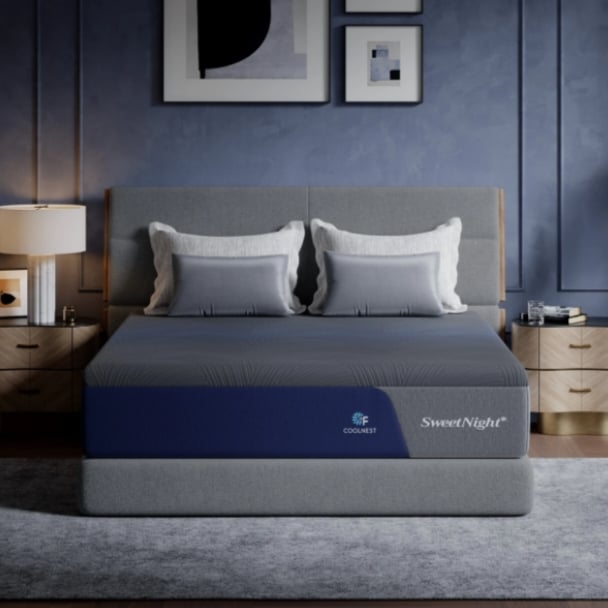
For people researching the best cooling memory foam mattress for hot sleepers, the SweetNight CoolNest® Ultra Memory Foam Mattress provides a clear example of a five-stage all-foam cooling design. Its Advanced CoolNest® Ultra System uses a five-stage cooling approach: a Gradient Cooling Ice Silk Cover, PCMflux® High Resilience Foam, AirMesh™ Breathable Memory Foam, ventilated gel memory foam, and a 3D open-channel breathable structure. SweetNight describes the system as feeling up to 11° cooler, while the AirMesh™ layer is designed to offer up to six times greater breathability than traditional memory foam. The technologies should be presented as complementary: the cover affects the surface, PCM responds to changing heat, gel helps disperse warmth, and the open foam structure provides airflow paths.
The Ultra model also includes refined 7-zone support intended to vary contouring across the shoulders, hips, lower back, and other areas. It should not be described as treating pain, preventing sweating, or staying cold for a guaranteed number of hours. Individual results depend on body type, room conditions, bedding, thickness, and firmness preference. The 100-night trial gives shoppers time to evaluate the model in their own sleep environment, and the 10-year warranty provides coverage only according to its current terms.
How to Judge Whether the Cooling System Is Truly Layered
Read the construction from top to bottom. Identify the cover material, then ask whether PCM or another heat-responsive component is present. Check whether the comfort foam is ventilated and whether the transition or base layers preserve airflow. A layered system does not need every possible technology, but it should show how heat moves beyond the surface.
A Brief Note on Trial and Warranty
A home trial is valuable because perceived warmth cannot be predicted perfectly from specifications. Warranty coverage should be read separately for eligible defects, exclusions, and foundation requirements. Neither policy is proof of a universal cooling result.
Final Thoughts
The strongest cooling memory foam choices combine a breathable surface with internal heat response and ventilation, while maintaining the firmness and support needed by the sleeper. Focus on layer-by-layer evidence, model-specific claims, and realistic at-home testing rather than relying on a single cool-to-the-touch feature.