Bamboo Baby Clothes Explained: Fabric Composition, Breathability, and What Parents Should Know


A baby outfit can look uncomplicated on the hanger and still raise surprisingly complicated questions once a parent reads the label. “Bamboo” is a good example. The word may suggest a plant-based fabric, while the finished textile in many garments is actually a manufactured fiber such as viscose or rayon made from bamboo. Then there are claims about softness, airflow, temperature, skin comfort, and easy care—some useful, some vague, and some much stronger than the evidence allows. On a health-focused shopping decision, those distinctions matter because parents deserve to know which statements describe a textile and which sound more like promises about a child’s body. For parents trying to make a thoughtful choice, the goal is not to find a magical fabric. It is to understand what the label really says, what remains uncertain, and how the entire garment is designed. The FTC specifically distinguishes actual bamboo fiber from rayon or viscose manufactured using bamboo as the plant source.
Before comparing products, use a simple three-part filter. First, read the fiber line literally instead of filling in what “bamboo” seems to imply. Second, separate visible features—such as a zipper, neckline, sleeve length, or stretch blend—from claims about cooling, irritation, or sleep. Third, decide whether the garment is meant for daytime dressing, naps, overnight sleepwear, travel, or layering, because those jobs are not automatically interchangeable. With that framework in mind, and after deciding whether the garment is meant for daytime wear or sleep, parents looking through bamboo pajamas can compare the generic fiber name, listed percentages, construction, size chart, care directions, and any sleepwear-specific fit or labeling instructions. The material category becomes one useful clue instead of the entire reason to buy.
The Word “Bamboo” Needs a Translation Before It Needs a Verdict
The FTC explains that when bamboo is chemically processed into a manufactured textile fiber, the finished material should generally be identified as rayon or viscose made from bamboo rather than simply as bamboo fiber. That wording matters because the soft fabric found in many garments is not raw bamboo.
The plant source also does not automatically prove that the finished garment is antibacterial, hypoallergenic, chemical-free, biodegradable, or better for eczema. The FTC specifically warns against assuming processed rayon retains antibacterial or environmental properties associated with the original plant. Parents can still prefer the feel or drape of a bamboo-derived viscose knit without turning that preference into a health claim.
Breathability Matters, but It Cannot Do Every Job
Breathability can contribute to how a textile feels, but it is only one part of the garment. Research on textiles shows that air permeability and water-vapor permeability are related to fabric structure and cannot be predicted from a fiber name alone. A thin knit and a heavier knit can therefore feel very different even if both belong to a bamboo-themed collection.
If an exact product describes its material as breathable or lightweight, parents can treat that as a textile characteristic. It should not automatically become “prevents overheating,” “keeps every baby cool all night,” or “improves sleep.” Those statements make a much stronger promise than the word breathable can support.
One Product’s Fiber Percentage Should Never Become the Whole Collection’s
Seeing “93% viscose made from bamboo and 7% spandex” on one garment does not mean every bamboo-labeled product uses that composition. Different styles can use different blends, so the exact SKU needs to support the percentage before it is repeated.
The individual product page is therefore more useful than a broad collection description when checking composition. Open Fabric + Care or Composition for the exact garment. If the percentage is unclear, do not borrow one from another color, romper, footie, or pajama style.
A Pale Green Romper Shows Why the Details Matter More Than the Buzzwords
PatPat currently lists the featured product as Baby Pale Green Zip-Up Romper in its BambooCloud™ range. The U.S. page identifies the color as Pale Green and currently shows sizes from 0–3M through 18–24M. At the time of verification, the product is marked out of stock.
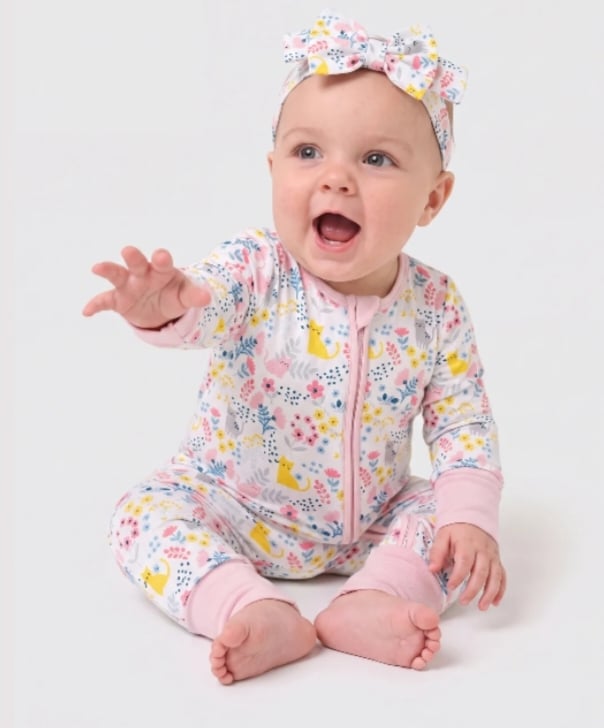
The official product imagery shows a simple pale-green, full-length zip-up design. The page also contains a Fabric + Care area, but the exact fiber percentages are not exposed in the product-page text available during verification. Rather than assigning this SKU the composition of another PatPat bamboo item, parents should check that field directly when the product is available again.
Selling Points Parents Can Actually Verify
- Pale-green one-piece styling: a simple solid-color design rather than a busy print.
- Full-length construction: the current product information describes a full-length outfit.
- Zip-up design: the closure is part of the exact current product name and visible product styling.
- BambooCloud™ range: the current U.S. page places the romper under this PatPat line.
- Six displayed infant size options: 0–3M through 18–24M are currently shown.
- Smooth neckline: PatPat’s current listing describes the neckline as smooth.
- Easy-to-coordinate color: the solid pale-green appearance can pair visually with other neutral baby basics.
These selling points are deliberately specific rather than dramatic. They describe the product itself without promising better sleep, healthier skin, perfect temperature control, or another outcome that the garment page cannot establish.
Soft Fabric Cannot Rescue the Wrong Fit
A fabric can feel smooth in the hand and still be the wrong garment if the fit does not suit the baby. Parents should compare current measurements with the exact size chart rather than treating labels such as 6–9M or 12–18M as universal body measurements.
Sleepwear deserves particular attention. CPSC guidance treats infant garments and tight-fitting children’s sleepwear as defined categories with specific measurement and labeling requirements. The practical rule for parents is straightforward: follow the product’s intended fit, size information, and garment label instead of deliberately buying oversized sleepwear simply to create extra growing room.
Baby Clothes Need a Job Description Before They Need a Material Ranking
The same textile may appear in several types of baby clothing, but that does not make those garments interchangeable. A parent choosing an outfit for daytime play may care about layering and quick dressing, while sleepwear brings different fit and labeling considerations.
That is why browsing bamboo baby clothes works better when the first question is, “What do I need this garment to do?” Only then should the comparison move to fiber wording, closure, sleeve length, stretch, seams, size chart, and care.
Starting with purpose also protects parents from making decisions based on one appealing material word. A romper, bodysuit, footie, and pajama set can all belong to the same broad fabric category while offering very different constructions.
Before Calling One Fabric “Better,” Check What You Can Prove
A health-conscious purchase does not require a winner-and-loser ranking. One family may prefer a smooth, stretchy viscose knit, while another prioritizes a different fiber, a looser daytime shape, or simpler care. The useful comparison is between exact garments rather than idealized material categories.
Start with information that can be verified: fiber name and percentage, construction, size range, care, and intended use. Then separate preference from fact. “I prefer the feel of this fabric” is a preference. “The label lists a specific percentage of spandex” is a product fact. “This fabric will prevent irritation” is a health claim and requires much stronger evidence.
That distinction is particularly helpful when reassuring marketing words appear at the same moment parents are trying to make a quick choice. A shorter list of trustworthy details can be more useful than a long list of promises.
Laundry Is Where Fabric Claims Meet Everyday Life
Care instructions are not an afterthought. Washing temperature, drying method, and blend composition can change how an individual garment should be handled. Creating one universal “bamboo laundry” routine can therefore be misleading.
Read the garment label before the first wash and check Fabric + Care for the exact product rather than assuming every bamboo-derived style should be treated identically. When replacing an outgrown garment, review the current information again because product construction and care guidance can change.
Health-Conscious Shopping Works Better Without Health Hype
Parents do not need to reject bamboo-derived textiles, and they do not need to treat them as a cure-all. Softness, stretch, closure design, size range, composition, and care are useful shopping information. Statements about eczema relief, allergy prevention, antibacterial action, guaranteed cooling, or improved sleep belong to a much higher evidence category.
For PatPat’s Baby Pale Green Zip-Up Romper, review the current U.S. product page before purchasing, confirm the exact fiber composition in Fabric + Care, compare the size chart with current measurements, check how the garment is intended to be used, and verify current stock and return eligibility.
The most useful way to think about bamboo baby clothing is therefore not “Is bamboo good or bad?” It is “What exactly is this fabric, what does this garment actually offer, and which claims can I verify?” That approach gives parents more useful information than any material buzzword can.