
What Are the Advantages of Composite Dental Bonding


The American Dental Association’s 2024 practice survey reveals that composite bonding procedures have increased by 35% over the past three years, making it one of the fastest-growing treatments in cosmetic dentistry. This surge reflects a broader shift toward minimally invasive dental solutions that deliver immediate results without the extensive preparation required for traditional restorative options.
What’s driving this momentum isn’t just patient preference for quicker treatments — it’s the evolution of composite materials themselves. Modern dental composites offer strength and aesthetic properties that were impossible just a decade ago, while techniques have become more refined and predictable. For patients weighing their options for everything from minor chips to more noticeable discoloration, understanding what composite bonding can and can’t accomplish has real implications for both their oral health and their wallet.
The decision often comes down to practical factors: whether to invest in more extensive treatments like veneers or crowns, or to start with a conservative approach that preserves natural tooth structure. As dental technology continues to advance and insurance coverage patterns shift, composite bonding sits at an interesting intersection of affordability, effectiveness, and aesthetic appeal that’s worth examining in detail.
Why Composite Bonding Matters in Modern Dentistry
The landscape of cosmetic dentistry has fundamentally shifted over the past decade, with patients increasingly seeking treatments that balance immediate results with long-term oral health preservation. Composite bonding has emerged as a cornerstone of this philosophy, offering a middle ground between doing nothing and committing to irreversible procedures that remove healthy tooth structure.
This trend reflects broader changes in how dental professionals approach treatment planning. Where the previous generation of dentists might have recommended crowns for moderately damaged teeth, today’s practitioners often start with the most conservative option that can achieve the desired outcome. The principle of “minimal intervention dentistry” has gained significant traction, supported by research showing that preserving natural tooth structure whenever possible leads to better long-term outcomes.
Patient expectations have evolved alongside these clinical philosophies. The rise of social media and remote work has increased awareness of dental aesthetics, but it’s also created demand for treatments that don’t require extensive time off or dramatic lifestyle adjustments. Composite bonding fits squarely into this preference pattern — most procedures can be completed in a single visit, often during a lunch break, with immediate return to normal activities.
The economic factor can’t be ignored either. As dental costs have risen across all treatment categories, patients and insurance providers alike have become more selective about which procedures represent genuine value. Composite bonding often serves as an effective “test run” for more extensive treatments, allowing patients to experience improved aesthetics while they decide whether additional investment makes sense for their particular situation.
Recent advances in composite technology have made this conservative approach more viable than ever. Today’s materials bond more reliably to tooth structure, resist staining better, and maintain their appearance longer than the composites available even five years ago.
How Composite Bonding Works and What Materials Are Used
The composite bonding process begins with careful tooth preparation that prioritizes preserving healthy structure. Unlike procedures that require significant enamel removal, bonding typically involves only light surface texturing to create an optimal bonding surface. The dentist applies a mild etching gel to create microscopic irregularities in the enamel, followed by a bonding agent that chemically links the composite material to the tooth structure.
Modern dental composites are sophisticated materials engineered from a resin matrix filled with microscopic glass or ceramic particles. These fillers give the composite its strength and durability, while the resin provides the workability that allows dentists to sculpt and shape the material during application. The particle size and distribution vary among different composite formulations — finer particles create smoother surfaces ideal for front teeth, while larger particles offer enhanced strength for areas that experience heavy chewing forces.
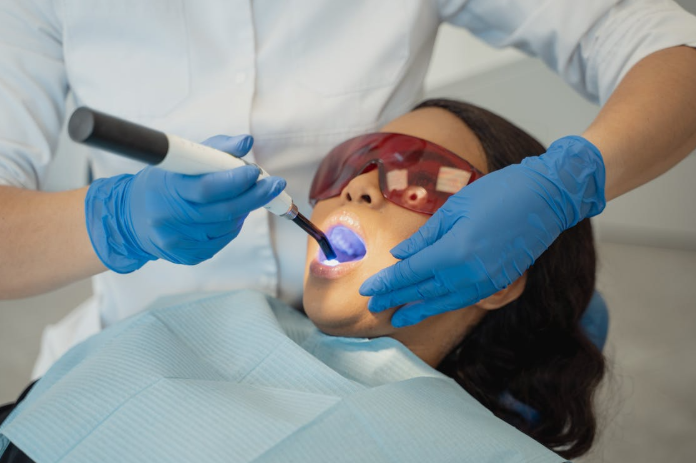
The layering technique used during application is critical to both strength and aesthetics. Rather than applying composite in one thick layer, skilled practitioners build up the restoration in thin increments, each cured with a specialized light that hardens the material in seconds. This approach allows for precise color matching and creates stronger bonds between layers, reducing the risk of delamination over time.
What makes composite bonding particularly versatile is the range of shades and translucency levels available. Dentists can blend multiple shades within a single restoration to match the natural color variations found in teeth, creating results that are virtually indistinguishable from surrounding enamel. The curing light not only hardens the material but also allows for real-time adjustments — if the shade isn’t quite right, additional layers can be added immediately.
The final polishing step transforms the cured composite from a slightly rough surface to a smooth, lustrous finish that mimics natural tooth enamel. This polishing process also eliminates microscopic irregularities where stains and bacteria might otherwise accumulate, contributing to the restoration’s longevity and appearance retention.
What Key Benefits Make Composite Bonding Stand Out
The most immediately apparent advantage of composite bonding lies in its aesthetic capabilities. Unlike traditional silver fillings that create obvious contrast with natural teeth, composite materials can be precisely color-matched to blend seamlessly with existing enamel. This matching process goes beyond simple shade selection — skilled practitioners layer different tones and translucency levels to replicate the subtle color variations that make natural teeth appear vibrant and lifelike.
Cost-effectiveness represents another significant benefit, particularly when compared to alternative cosmetic treatments. While porcelain veneers might cost three to four times more per tooth, composite bonding can often achieve similar aesthetic improvements for front-tooth chips, gaps, or discoloration at a fraction of the investment. This price differential allows patients to address multiple teeth simultaneously or to test aesthetic changes before committing to more expensive permanent solutions.
The minimally invasive nature of bonding preserves tooth structure in ways that many alternatives cannot match. Veneers typically require removal of 0.5 to 0.7 millimeters of enamel from the front surface of teeth — a permanent change that commits the tooth to needing coverage for life. Composite bonding, by contrast, usually requires little to no enamel removal, maintaining the tooth’s natural strength and preserving future treatment options.
Treatment speed offers practical advantages that extend beyond simple convenience. Most composite bonding procedures are completed in a single appointment lasting one to two hours, depending on the number of teeth involved. Patients can return to work the same day with fully functional restorations, avoiding the temporary crowns, multiple appointments, and dietary restrictions often associated with other cosmetic treatments.
Versatility across different types of dental issues makes composite bonding particularly valuable for addressing mixed concerns within the same mouth. A single appointment might address a chipped canine, close a gap between front teeth, and mask discoloration on an adjacent tooth — something that would require different treatment approaches and multiple specialists with other technologies. When patients need comprehensive cosmetic bonding options that can address several aesthetic concerns simultaneously, this flexibility becomes a significant advantage.
The reversible nature of composite bonding provides peace of mind for patients uncertain about permanent changes to their smile. Because the underlying tooth structure remains largely intact, bonding can be removed or modified if preferences change or if more extensive treatment becomes necessary later.
Which Dental Issues Does Composite Bonding Address and What Patients Experience
Composite bonding excels at addressing the type of minor to moderate dental imperfections that significantly impact appearance but don’t necessarily compromise tooth function. Chipped teeth represent one of the most common applications, particularly for front teeth damaged by accidents, sports injuries, or simply biting into something harder than expected. The composite material can rebuild the missing tooth structure with remarkable precision, often making the repair virtually undetectable.
Discoloration that doesn’t respond well to whitening treatments presents another ideal scenario for bonding. Certain types of stains — particularly those caused by medications, fluorosis, or trauma — penetrate too deeply into tooth structure to be effectively lightened by bleaching agents. Composite bonding can mask these discolorations completely while maintaining the natural translucency that makes teeth appear vital and healthy.
Small gaps between teeth, technically called diastemas, can often be closed with composite bonding when they’re not severe enough to warrant orthodontic treatment. This approach works particularly well for gaps that developed after orthodontic treatment has been completed, or for patients who prefer not to undergo months of realignment for a relatively minor spacing issue.
The patient experience during composite bonding procedures is generally more comfortable than many people anticipate. Most treatments require little to no anesthesia, since minimal tooth preparation is involved. Patients typically report only mild sensitivity during the etching phase, which lasts just a few minutes. The actual bonding process is painless — patients often watch movies or listen to music during the procedure.
Recovery is immediate in most cases. Unlike treatments that require healing time or gradual adjustment, bonded teeth can be used normally right away. Patients should avoid extremely hard foods for the first 24 hours while the bond reaches full strength, but normal eating, drinking, and oral hygiene can resume immediately. This immediate functionality represents a significant quality-of-life advantage over treatments that require temporary restrictions or multiple healing phases.
Long-term maintenance of composite bonding is straightforward but does require some awareness. The material can chip or stain over time, particularly in patients who bite their nails, chew ice, or consume large quantities of staining substances like coffee or wine. Regular dental cleanings help maintain the polish and remove surface stains before they become permanent, while avoiding habits that put excessive stress on the bonding helps ensure longevity.
What Research and Long-Term Results Reveal About Composite Bonding Effectiveness
Clinical studies tracking composite bonding outcomes provide valuable insights into what patients can realistically expect from their investment. Research published in the Journal of Dentistry indicates that properly placed composite restorations have survival rates of approximately 85-90% at five years, with the primary mode of failure being gradual wear rather than sudden fracture or debonding.
The longevity of composite bonding varies significantly based on location within the mouth and patient habits. Front teeth, which experience less chewing force but more exposure to staining substances, tend to maintain their appearance for 7-10 years before requiring replacement or refreshing. Back teeth, subjected to heavier bite forces, may need attention sooner but often serve effectively for 5-8 years with proper care.
Technique sensitivity plays a crucial role in long-term success rates, according to research from dental schools tracking student vs. experienced practitioner outcomes. Proper isolation from saliva during the bonding process, appropriate layer thickness, and thorough curing between layers all significantly impact durability. This explains why success rates vary between practitioners and emphasizes the importance of choosing dentists with substantial composite bonding experience.
Recent advances in composite chemistry have improved performance metrics across several dimensions. Newer formulations show enhanced wear resistance and better color stability over time compared to materials available even a decade ago. Nanotechnology has enabled the development of composites with filler particles small enough to create smoother surfaces that resist staining and bacterial adhesion more effectively.
Patient satisfaction surveys consistently rate composite bonding highly for aesthetic improvement and value, though expectations management remains critical. Patients who understand that bonding represents an excellent medium-term solution rather than a permanent fix report higher satisfaction levels than those expecting lifetime durability. The ability to repair or refresh bonding relatively easily and affordably helps maintain satisfaction even when touch-ups become necessary.
The key limitation that research consistently identifies involves the material’s susceptibility to surface degradation over time. While the bond to tooth structure remains strong, the composite surface gradually develops microscopic roughness that can trap stains and bacteria. This process is accelerated by acidic foods and drinks, aggressive brushing, and certain medications that reduce saliva production.
Understanding these research findings helps patients make informed decisions about whether composite bonding aligns with their aesthetic goals, maintenance preferences, and long-term dental plans. For many patients seeking immediate improvement with reasonable longevity, the evidence strongly supports composite bonding as an effective first-line treatment option.