
What to Do After Discovering a Dent on Your Car Door?


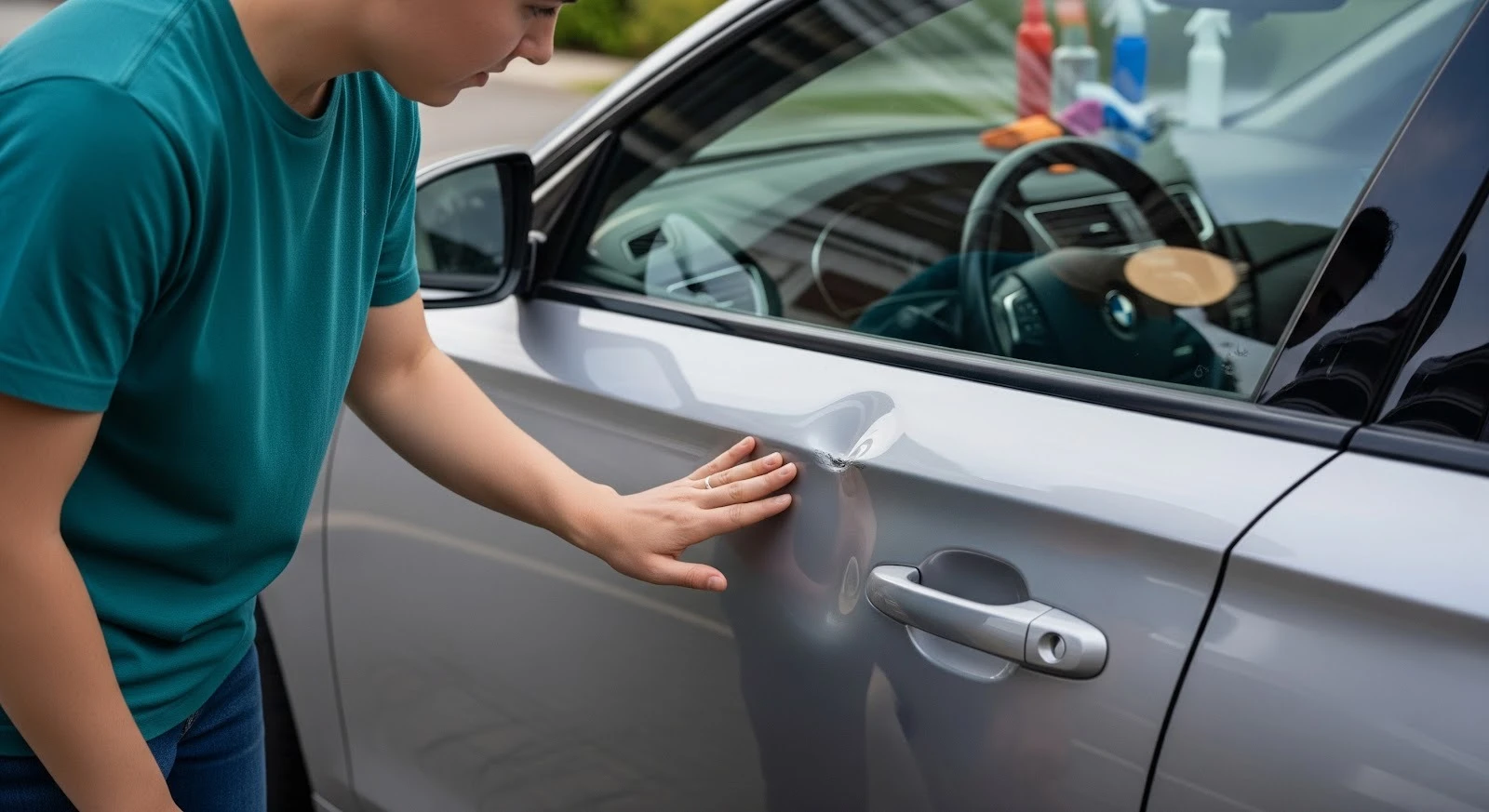
You walk out to the parking lot. The sun hits your driver’s side door just right.
Your stomach drops.
There it is. A dimple. A crease. A crater left by some careless jerk who swung their door open like they were breaking out of prison. You stand there staring at it. You rub it with your thumb as if that will magically buff the metal back into shape. It won’t.
Stop staring. The damage is done. The only thing that matters now is how much money you are about to lose and how to keep that number as low as possible.
Most people panic. They drive straight to a body shop or call their insurance agent immediately. That is a rookie mistake. I have spent years dealing with cars, dealers, and the tedious bureaucracy of repairs. I have learned the hard way that rushing this process costs you double.
Here is the playbook for fixing your door without getting fleeced.
Step 1: The Fingernail Test
Before you Google anything, look at the paint. Run your fingernail across the scratch or the center of the dent.
Does your nail catch?
If your fingernail glides over it seamlessly, congratulations. You likely just have clear coat damage or paint transfer. A little rubbing compound and some elbow grease might fix eighty percent of the problem.
If your nail catches in a groove, you are through the clear coat. If you see white or grey primer, you are deep. If you see bare metal, you are on a clock. Exposed metal rusts. Once rust starts, it spreads like a virus under the paint. You have weeks, not months, to address this.
Step 2: Forget the Internet Hacks
Please stop watching those fifteen-second videos. You know the ones. A guy pours boiling water on a bumper and pushes the dent out. Or they use a toilet plunger to pop a door panel back into place.
I tried the boiling water trick once on an old sedan. It was 2014. I felt like a genius carrying a kettle out to the driveway. I poured it on. I pushed from behind the bumper. Nothing happened. Actually, something did happen. I burned my hand and the plastic bumper turned slightly milky from the heat stress.
Door metal is not plastic. When it gets bent, the metal stretches. A plunger cannot un-stretch steel. Unless the dent is the size of a dinner plate and completely round, DIY tools will likely make it look worse. You will end up with a weird, rippled surface that looks like cellulite.
Step 3: The Magic of PDR
If the paint is intact, do not go to a body shop. Go to a Paintless Dent Repair (PDR) specialist.
Body shops make money by painting things. They want to sand your door, fill it with putty, and spray it. That takes three days and costs $800.
PDR guys are basically metal wizards. They use long metal rods to massage the dent out from the backside of the panel. They don’t use fillers. They don’t use paint. They just use leverage and patience.
I watched a PDR tech fix a nasty crease on my truck in twenty minutes while I drank a coffee. It cost me $150. You couldn’t tell the dent ever existed. If you skip this option, you are throwing money away.
Step 4: When to Call the Pros
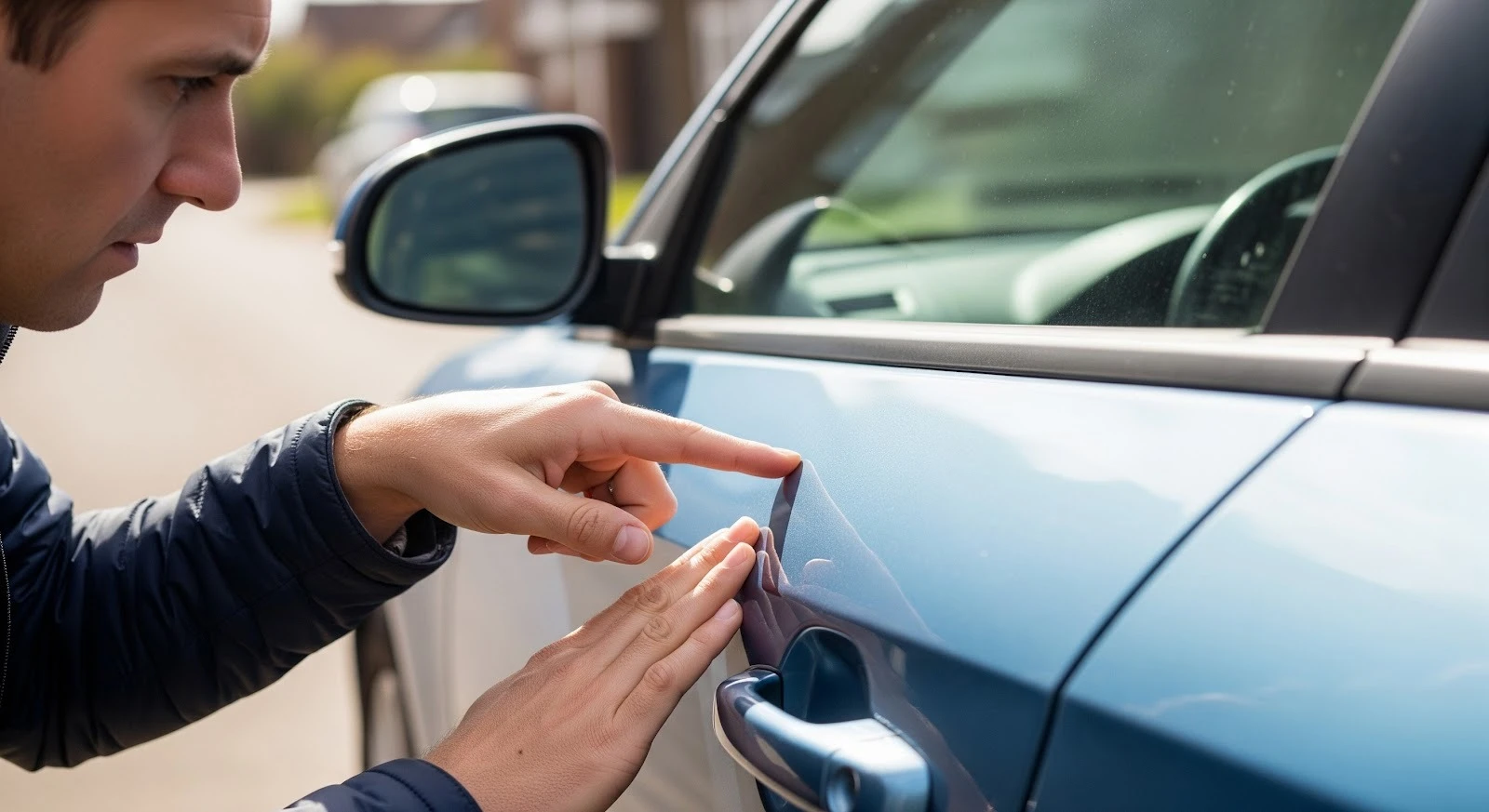
Sometimes PDR isn’t enough. If the paint is missing or the metal is crunched near the edge of the door, you have a bigger problem. Edges are structurally rigid. They don’t pop back out.
This is when you actually need traditional car panel repair.
Be specific when you ask for quotes. Ask them if they plan to “skin” the door (replace the metal sheet) or use filler. Heavy filler eventually cracks. If they want to use a pound of Bondo on a door that gets slammed shut five times a day, walk away. Vibration kills bad repair jobs.
Get three quotes. The price difference between a dealership collision center and a reputable independent shop can be over 40%. The dealer usually subcontracts the work to the independent shop anyway and charges you a markup. Cut out the middleman.
Step 5: The Insurance Math
This is where people get emotional and make bad financial decisions.
You pay for insurance. You want to use it. It feels like justice. But filing a claim for a minor dent is often mathematical suicide.
Let’s look at the numbers.
Say your deductible is $500. The repair estimate is $850.
If you file a claim, the insurance company pays $350. You pay $500. You feel smart because you saved $350.
But you didn’t. You just flagged yourself as a risk.
In many regions, a claim stays on your record for three to five years. If your premium hikes up by just $15 a month because of that claim, you pay an extra $540 over three years. You saved $350 upfront to pay $540 later. You lost nearly $200 trying to be clever.
This is the core of Personal Insurance Planning. You have to treat your insurance like catastrophe coverage, not a maintenance plan. If the repair cost is less than double your deductible, pay cash. Keep the claim off your record. Save the insurance for when you hit a deer or total the car.
Final Thoughts
Fixing a dent is annoying. It ruins your week. But it is just metal.
If the car is ten years old and the paint isn’t cracked, maybe you do nothing. That is a valid option. Call it “city camouflage.”
But if you fix it, do it right. Check the paint depth. Call a PDR guy first. And for the love of your bank account, keep the insurance company out of it unless the door is falling off.
And next time? Park at the back of the lot. The walk is good for you.