
From Weekend Task to Background System: Rethinking Pool Maintenance Workflows
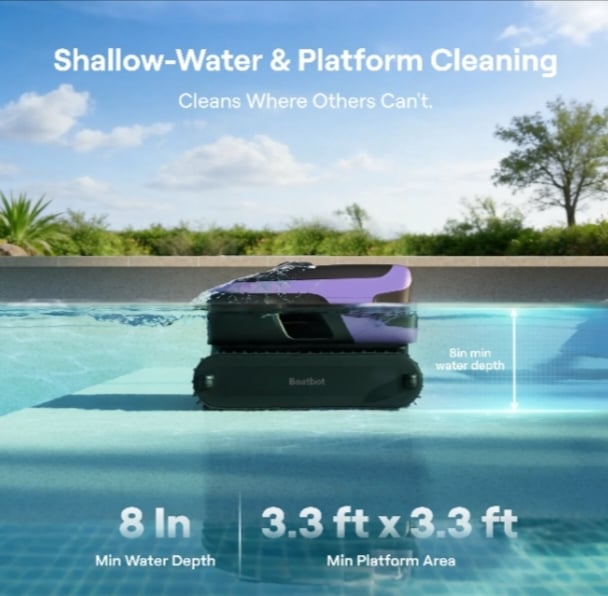


Most people treat pool maintenance as a task.
Something you complete, check off, and move on from.
But in practice, it behaves more like a workflow—one that never fully stops.
Why Pool Maintenance Is Not a Task, But a Continuous Workflow
A task has a clear beginning and an end.
You perform it, you finish it, and it’s done.
Pool maintenance doesn’t follow that pattern.
Debris returns. Water conditions shift. Surfaces change depending on usage and environment. What was “done” yesterday often needs attention again today.
A task can be finished. A workflow needs to be maintained.
And that distinction changes everything.
Where Traditional Cleaning Workflows Break Down
Most traditional approaches rely on intervals.
You clean at specific times. You respond when something becomes visible. You adjust based on observation.
But the pool itself doesn’t update at those intervals.
Because the system only updates at specific moments, it cannot reflect real-time changes in conditions.
Debris accumulates unevenly. Certain areas change faster than others. The gap between cleaning cycles becomes the space where inconsistency develops.
Over time, this leads to a pattern of repeated correction rather than stable maintenance.
Why Above-Ground Pools and Inground Pools Behave Differently
Not all pools behave the same way within this workflow.
Above-ground pools often follow simpler patterns. Their structure is more uniform, and debris distribution tends to be easier to manage. In these cases, workflows remain relatively predictable for longer periods.
But inground pools introduce a different dynamic.
Depth variations, steps, slopes, and structural complexity create uneven movement within the water. Debris collects in specific areas, and those areas require more consistent attention.
This is why solutions like above ground pool cleaners robotic systems are often evaluated differently depending on the pool type.
Above-ground pools can sometimes tolerate simpler workflows.
Inground pools tend to expose their limitations much faster.
Why Improving the Workflow Matters More Than Increasing Effort
When maintenance feels inconsistent, the instinct is to increase effort.
Clean more often. Spend more time. Pay closer attention.
But effort doesn’t fix the underlying issue.
More effort does not fix a broken workflow—it only compensates for it temporarily.
If the system itself remains reactive, the result will still fall behind real conditions.
The problem isn’t how much work is done.
It’s how that work is structured.
How Continuous Systems Replace Manual Pool Maintenance Workflows
The key shift in modern pool care is not additional effort, but structural change.
Instead of operating in cycles, some systems function continuously. They don’t wait for visible problems—they maintain conditions before those problems appear.
This is where a pool auto vacuum becomes part of the workflow itself.
Rather than acting as a tool used occasionally, it operates as a continuous layer within the system.
In this context, systems like the Beatbot AquaSense X function less as tools and more as embedded maintenance processes—reducing the need for repeated decisions and interventions.
The workflow doesn’t pause.
It adapts.
Why Structural Complexity Requires System-Based Coverage
As pool structures become more complex, workflow limitations become more visible.
Corners, steps, and varying depths create zones where debris accumulates differently. These variations are difficult to manage with interval-based cleaning alone.
System-based approaches address this by maintaining coverage across the entire structure, not just the most visible areas.
For more complex layouts, solutions like the Beatbot Sora 70 illustrate how automated systems adapt to variation across surfaces rather than focusing on isolated problem areas.
The goal is not to clean faster.
It is to maintain balance across the entire system.
What Changes When Maintenance Becomes Part of the System
When maintenance shifts from a task to a system, the experience changes.
There is no longer a need to plan cleaning around usage. No need to check conditions before stepping outside. No need to repeat the same adjustments over time.
The system no longer waits for intervention—it operates as part of the environment itself.
And when that happens, the workload begins to disappear—not because the work is gone, but because it is no longer dependent on constant input.
Conclusion
The real shift isn’t in how pools are cleaned.
It’s in how maintenance is structured.
And once that structure changes, the workload disappears with it.