
Understanding What Police Look for During a DUI Traffic Stop
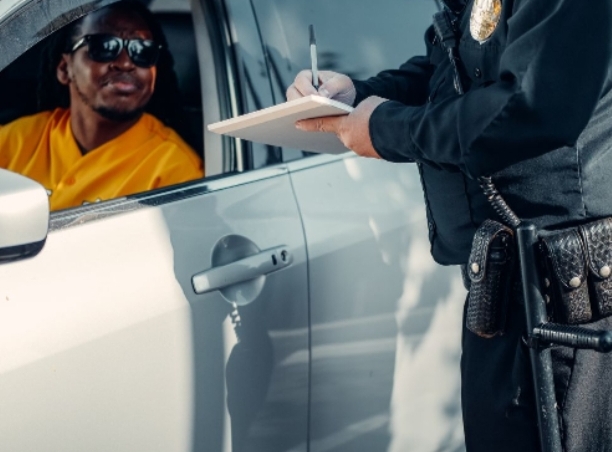


Every year, NHTSA data shows that roughly 10,000 people die in drunk-driving crashes in the United States — a number that has remained stubbornly persistent despite decades of enforcement campaigns, public awareness efforts, and increasingly sophisticated detection technology. DUI traffic stops sit at the center of how law enforcement tries to move that needle. For drivers, understanding how these stops actually unfold — from the moment an officer clocks an erratic lane change to the point where a breathalyzer reading becomes criminal evidence — isn’t just interesting. It’s genuinely useful.
The DUI arrest process is more procedurally layered than most people expect. Officers follow specific investigative sequences built around observable cues, standardized tests, and statutory obligations. Each step has legal significance, and each creates a record that follows the driver into the court system. What happens in the first few minutes of a traffic stop can shape every stage that comes after.
This article walks through the full arc of that process — what police observe, how they test for impairment, what rights drivers carry into that interaction, and what the timeline looks like once an arrest is made.
How Police Identify Signs of Impairment During Stops
A DUI investigation rarely begins at the moment an officer turns on their lights. In most cases, it starts earlier — when a driver’s behavior on the road triggers enough concern to justify the stop itself.
Officers are trained to watch for specific patterns. The National Highway Traffic Safety Administration (NHTSA) has documented 24 driving cues associated with impaired operation, including weaving within a lane, wide turns, stopping abruptly, driving without headlights at night, and nearly striking other vehicles or stationary objects. These cues are weighted by predictive value — some are far more reliable indicators of impairment than others, and officers use them collectively rather than in isolation.
Once a vehicle is pulled over, the investigation shifts to direct observation. Officers approach with deliberate attention to things a driver might not think twice about: the smell of alcohol or marijuana from the vehicle, slurred or unusually careful speech, bloodshot or glassy eyes, fumbling when retrieving a license and registration, and difficulty following simple instructions. An open container visible in the cabin can accelerate the suspicion significantly.
Consider a fairly typical scenario: a driver leaving a late dinner, having had two glasses of wine, gets pulled over for drifting across a lane marker. The officer notices a faint smell of alcohol, observes that the driver’s eyes are slightly red (which the driver attributes to allergies), and notes that the driver hands over a credit card instead of their license the first time. None of these individually establishes impairment — but together, they give the officer reasonable grounds to move the encounter to the next stage.
That transition matters legally. Under the Fourth Amendment, officers need reasonable suspicion to initiate a stop and probable cause to make an arrest. The observational phase is how they build toward that probable cause threshold. Everything the officer notes during approach and initial questioning is documented and can become part of the evidence record. This is why the seemingly casual conversation at the driver’s window isn’t casual at all — it’s an assessment.
How Field Sobriety and Chemical Tests Work During Arrests
Once an officer develops reasonable suspicion during the initial contact, they’ll typically ask the driver to step out of the vehicle. This is the point where standardized testing begins.
How Field Sobriety Tests Are Conducted and Evaluated
Standardized Field Sobriety Tests (SFSTs) are a battery of three assessments developed and validated by NHTSA. They’re designed to give officers a consistent, documented basis for determining whether impairment is present.
The Horizontal Gaze Nystagmus (HGN) test has the officer move a small object — a pen or finger — slowly across the driver’s field of vision, watching for an involuntary jerking of the eye that alcohol causes at certain gaze angles. The Walk-and-Turn test requires the driver to take nine heel-to-toe steps along a straight line, turn on one foot, and return. The One-Leg Stand asks the driver to hold one foot about six inches off the ground while counting aloud for 30 seconds. Officers score each test against specific criteria: stepping off the line, using arms for balance, starting too early, losing count.
These aren’t pass/fail in a simple sense. Officers are trained to look for a defined number of “clues” in each test — two or more clues on the One-Leg Stand, for example, suggests impairment in a meaningful percentage of cases according to NHTSA validation studies. Non-standardized tests like reciting the alphabet or counting backward are sometimes used additionally, though they don’t carry the same evidentiary weight.
How Breathalyzers and Blood Tests Measure Alcohol Levels
If field sobriety tests suggest impairment, the officer will typically administer a preliminary breath test (PBT) at the roadside — a portable device that estimates blood alcohol content (BAC). In most states, a BAC of 0.08% or above meets the legal threshold for per se intoxication, meaning impairment is legally presumed regardless of other factors.
The roadside PBT is generally considered a screening tool rather than definitive evidence. After a formal arrest, drivers are usually transported to a station or testing facility where an evidentiary-grade breathalyzer is administered. These devices are calibrated regularly and produce results admissible in court. In some circumstances — particularly when a driver is injured, when drugs are suspected, or when a driver refuses a breath test — officers may seek a blood draw, which is more invasive but provides a more comprehensive chemical analysis. Blood tests can detect a wider range of substances and are typically processed through a certified lab.
What Rights Drivers Have and How Implied Consent Laws Apply
Understanding the rights framework around a DUI stop doesn’t require a law degree, but it does require clarity about what applies when.
Understanding Your Rights During a DUI Traffic Stop
The Fifth Amendment right against self-incrimination and the Sixth Amendment right to counsel both apply in the DUI context, but with important timing nuances. A driver is not legally required to answer questions beyond identifying themselves and producing required documents — license, registration, proof of insurance. Statements made voluntarily at the roadside are admissible, and drivers often inadvertently provide incriminating information by over-explaining or attempting to minimize what they’ve consumed.
The right to an attorney generally attaches at the point of formal arrest. Before that moment, officers are not required to advise a driver of Miranda rights, and those rights do not automatically govern the pre-arrest roadside conversation. Once placed under arrest, a driver does have the right to speak with an attorney before making further statements, and invoking that right clearly and promptly is significant. Individuals who navigate this stage without understanding these distinctions sometimes create complications that follow them through the entire legal process — which is part of why consulting an experienced Denver DUI attorney early can matter considerably for how the evidence from these initial stages gets evaluated.
What Implied Consent Means in DUI Arrests
Here’s where many drivers are caught off guard: by obtaining a driver’s license in any U.S. state, motorists have legally agreed in advance to submit to chemical testing if lawfully arrested for DUI. This is implied consent, and it’s embedded in the licensing statutes of every state.
The practical consequence is significant. Refusing a breathalyzer or blood test after a lawful DUI arrest doesn’t make the evidence disappear — it typically triggers automatic administrative penalties, including license suspension, that are separate from and in addition to any criminal penalties. In many states, refusal can also be introduced as evidence in a criminal proceeding, with the jury permitted to draw its own inferences. The specific penalties for refusal vary by state and by whether it’s a first or subsequent offense, but the consequences are rarely minor.
What Happens After a DUI Arrest and the Legal Timeline
Most people don’t realize they’re running two separate clocks after a DUI arrest — one in the criminal court system and one in the administrative system through the DMV or equivalent state agency.
On the administrative side, the arresting officer typically confiscates the driver’s license immediately and issues a temporary driving permit. The driver has a limited window — often 7 to 10 days depending on the state — to request a DMV hearing to contest the automatic license suspension. Miss that deadline, and the suspension goes into effect regardless of what happens with the criminal case. These hearings are independent of court proceedings and address only the driving privilege, not criminal liability.
On the criminal side, the process begins with booking — fingerprinting, photographing, and recording charges. Depending on the jurisdiction and circumstances, a driver may be held until sober, released on their own recognizance, or required to post bail. A first court appearance or arraignment typically occurs within 24 to 72 hours of arrest, where charges are formally presented and an initial plea is entered.
From there, the timeline varies considerably by jurisdiction, caseload, and whether the case involves aggravating factors like a prior DUI, a minor in the vehicle, or an accident. Pre-trial hearings may address the admissibility of test results or the legality of the stop itself. Cases may resolve through plea agreements or proceed to trial. The full process from arrest to resolution can take anywhere from a few months to over a year.
Throughout this window, the administrative license suspension process and the criminal timeline can interact in ways that affect driving privileges, insurance rates, and — in the case of commercial drivers — employment. Ignition interlock device requirements, if ordered, typically begin at the point the license is reinstated rather than at arrest.
Common Misconceptions and the Public Safety Role of DUI Enforcement
A few persistent myths cloud how people understand DUI arrests, and getting them wrong can lead to poor decisions in a high-stakes moment.
One of the most common is that refusing all tests eliminates the state’s case. As covered above, implied consent laws directly contradict this. Refusal creates its own evidentiary and administrative consequences — it doesn’t simply erase the encounter.
Another misconception is that field sobriety tests are optional in the same way chemical tests are not. The legal landscape here varies by state, but in many jurisdictions, pre-arrest field sobriety tests are technically voluntary. However, declining them doesn’t prevent arrest if other probable cause exists, and the dynamics of refusing in the moment are more complex than simply knowing the rule.
There’s also a widespread belief that DUI enforcement disproportionately targets casual drinkers rather than genuinely impaired drivers. The data tells a different story. According to the NHTSA’s 2023 Traffic Safety Facts, drivers with BAC levels of 0.15% or higher — nearly double the legal limit — represent a significant share of alcohol-involved fatalities. DUI checkpoints and enforcement operations are specifically designed around evidence-based patterns of when and where impaired driving is most likely.
Understanding the DUI arrest process as a structured, evidence-building sequence — rather than a series of arbitrary decisions — shifts how clearly you see both the law enforcement purpose and the legal rights woven through it. The next time you see a traffic stop on the side of the road, you’re watching an investigative procedure with constitutional guardrails, documented protocols, and real consequences at every step.