
The Analytics of the Big Game: How 2026’s roster data informed the Super Bowl LX strategy
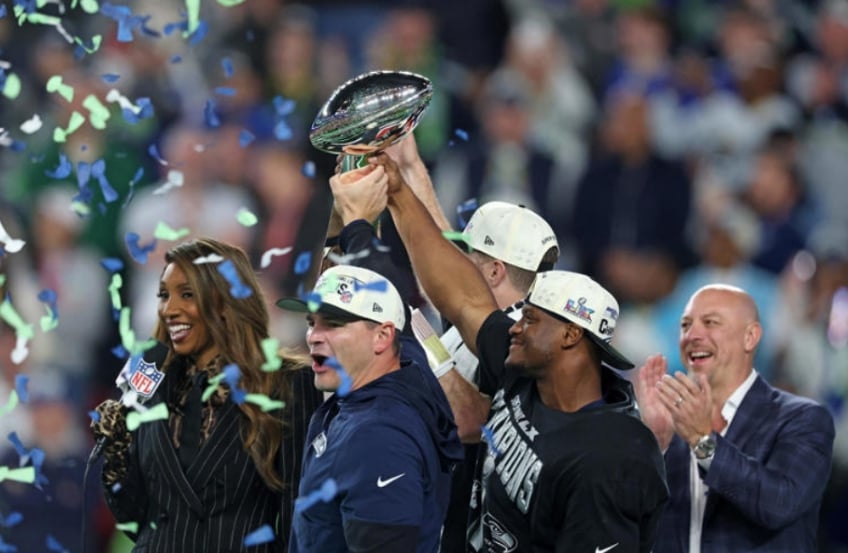


Super Bowl LX at Levi’s Stadium on February 8, 2026, delivered more than a 29–13 final score in favor of the Seattle Seahawks over the New England Patriots. It revealed how modern NFL organizations now treat roster data, sub-package tendencies, release-time tracking, and personnel percentages as strategic weapons rather than secondary support tools. Four days after that championship night in Santa Clara, the film and the numbers tell a layered story: Mike Macdonald’s defensive structure, Josh McDaniels’ Drake Maye-specific adjustments, the league-wide 95.6% sub-package trend against 11 personnel, and the looming March 11 league year with a projected salary cap of up to $305.7 million all intersect in a single analytical arc that stretches beyond one February evening and into the architecture of the 2026 season.
The Santa Clara Tactical Shift
The Seahawks’ 29–13 victory over the Patriots in Super Bowl LX was not driven by a singular highlight but by a data-defined commitment to defensive architecture that reflected Mike Macdonald’s philosophical imprint. At Levi’s Stadium on February 8, 2026, Seattle prioritized containment metrics—snap-to-throw disruption windows, forced second-reaction throws, situational leverage rates, and coverage shell discipline—over isolated star-driven heroics. Rather than relying on individual dominance, Macdonald leaned into alignment symmetry and rotational disguise, presenting pre-snap looks that mirrored Patriots tendencies before shifting late into alternative coverage structures. By studying formation splits, down-and-distance efficiency clusters, and sequencing habits embedded in New England’s offensive data, Seattle created hesitation in the quarterback’s processing timeline. That hesitation translated into compressed throwing windows, elongated progressions, and stalled red-zone efficiency, reinforcing how structural integrity can outperform raw athletic flash in a championship environment decided 29–13.
Drake Maye’s Data-Driven Ascent
Despite the loss, the Patriots’ offensive identity in 2026 revolved around second-year quarterback Drake Maye, and Josh McDaniels’ system was unapologetically tailored to measurable variables tied to Maye’s development curve. McDaniels constructed a “Drake Maye-specific” scheme rooted in release-time tracking, calibrated route depths, protection slide probabilities, and half-field reads that simplified post-snap interpretation. By isolating one side of the field and defining high-low concepts within controlled progression trees, the Patriots aimed to maximize efficiency while minimizing exposure to disguised pressure. Release-time tracking became a core performance indicator, with Maye’s internal clock benchmarked against defensive alignment depth and rotation frequency. When Seattle delayed shell declarations until the snap clock dipped under five seconds, the Patriots countered with rapid timing concepts designed to beat structural shifts. However, the Seahawks’ disguise discipline compressed those windows, demonstrating how defensive analytics can blunt even a quarterback-specific offensive ecosystem carefully engineered around measurable strengths.
Personnel as a Weapon: The Heavy Sub-Package Trend
Across the 2026 season, defenses matched 11 personnel with five or more defensive backs 95.6% of the time, a staggering statistic that redefined baseline alignments and forced offensive recalibration league-wide. When nickel and dime effectively became base responses, coordinators sought leverage by pivoting toward 12 and 21 groupings, using tight ends and fullbacks not as nostalgic throwbacks but as analytical counters to lighter defensive boxes. Both the Seahawks and Patriots embraced that recalibration in Super Bowl LX, strategically deploying heavier personnel to manipulate coverage math and stress run fits conditioned by the 95.6% defensive back trend. Seattle integrated 12 personnel to compel defensive declarations before the snap, creating layered route combinations that tested communication in hybrid coverage looks. New England used 21 personnel to probe interior gaps and challenge fronts optimized for spread formations. The championship became a live case study in how data saturation around 11 personnel reshaped play-calling logic, turning heavier groupings into precision tools rather than philosophical statements.
Beyond the Big Game: Transitioning to 2026 Free Agency
The NFL league year officially begins on March 11 with a projected salary cap of up to $305.7 million, and that financial framework now overlays every snap played on February 8, 2026. The Seahawks’ Super Bowl LX lineup and the Patriots’ runner-up configuration function as evaluative baselines as front offices assess retention strategies, extension negotiations, and positional value allocation under the $305.7 million ceiling. Each alignment at Levi’s Stadium becomes scouting currency, influencing contract leverage and depth planning. Established NFL starting lineups from Super Bowl Sunday transform into reference points for cap modeling, durability projections, and succession mapping as organizations prepare for roster churn. Seattle must determine how to sustain a championship-caliber defensive structure within cap constraints, while New England evaluates how to fortify Drake Maye’s supporting cast without compromising long-term flexibility. The March 11 opening of the league year accelerates those decisions, translating analytical performance data into financial commitments.
Looking Toward Pittsburgh: The 2026 Draft Cycle
The 2026 NFL Draft in Pittsburgh, scheduled for April 23–25, will distribute 257 picks over three days, and those selections represent the next infusion of data into rosters shaped by Super Bowl LX. Teams will layer collegiate production metrics, athletic testing profiles, and situational efficiency analytics onto professional depth charts refined on February 8, 2026. Seattle’s 29–13 blueprint under Mike Macdonald and New England’s Drake Maye-centered offensive recalibration echo inside draft rooms as executives map needs against projected value curves. Depth charts are no longer static documents but predictive models that integrate injury probability, snap distribution, and sub-package frequency into draft prioritization. The 257 picks in Pittsburgh will not simply add talent; they will refine strategic ecosystems influenced by the 95.6% defensive response to 11 personnel, the financial realities of a projected $305.7 million cap beginning March 11, and the championship data harvested at Levi’s Stadium. The arc from February 8, 2026, to April 23–25 reflects a league in which the analytics of one 29–13 result ripple forward, shaping how contenders build, adjust, and pursue the next Super Bowl stage.