
Investing in Diamonds: Key Factors That Affect Their Worth
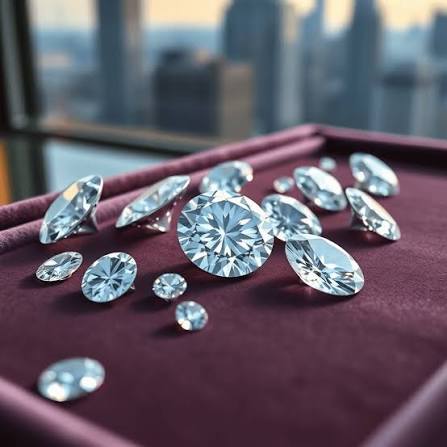


Diamonds have long been seen as a symbol of luxury and a store of value. But investing in them isn’t as simple as buying a beautiful stone. Unlike gold or stocks, there’s no standard spot price for diamonds. Their worth depends on a complex mix of factors that can be hard for a non-expert to understand.
Before you can even think about selling, it’s important to know what makes a diamond valuable. Getting an accurate appraisal from the best diamond buyers from Diamond Banc is a good first step, but understanding the fundamentals yourself is even better.
This guide breaks down the key factors that determine a diamond’s real market worth.
The 4Cs: The Foundation of Diamond Value
You’ve probably heard of the 4Cs. They’re the most basic and universal standard for judging a diamond’s quality. The Gemological Institute of America (GIA) created this system, and it’s used by jewelers everywhere.
Carat Weigh
This is the most straightforward factor. One carat equals 200 milligrams. Bigger diamonds are rarer, so their price per carat is higher. A single 2-carat diamond will always be worth more than two 1-carat diamonds of the same quality. This is because the price per carat increases exponentially as the size increases.
For example, a 2-carat diamond isn’t just twice the price of a 1-carat diamond; it could be three or four times the price, assuming all other factors are equal.
Cut
This isn’t about the diamond’s shape (like round or princess). It’s about how well the diamond’s facets interact with light. A well-cut diamond will have amazing brilliance and sparkle. A poorly cut one will look dull, no matter its color or clarity.
Cut is often considered the most important of the 4Cs because it has the biggest impact on a diamond’s beauty. The GIA grades cut on a scale from Excellent to Poor. An Excellent cut grade can increase a diamond’s value by as much as 25%.
Color
For white diamonds, the less color, the better. The GIA grades color on a scale from D (colorless) to Z (light yellow or brown). A completely colorless D-grade diamond is rare and very valuable.
The differences between grades can be so subtle that you can’t see them with the naked eye, but they make a big difference in price. For investment purposes, most experts recommend sticking to the D-K range.
Clarity
This refers to the absence of inclusions (internal flaws) and blemishes (external flaws). The clarity scale ranges from Flawless (FL) to Included (I3). A flawless diamond is incredibly rare. Most diamonds have tiny imperfections that you can only see under 10x magnification.
For investors, diamonds in the VVS (Very, Very Slightly Included) to VS (Very Slightly Included) range are often a good balance of quality and value. You can’t see the inclusions with the naked eye, but they’re not as expensive as Flawless or Internally Flawless diamonds.
Beyond the 4Cs: What Else Matters?
The 4Cs are just the start. Several other factors can have a huge impact on a diamond’s investment potential.
Diamond Shape
The shape of a diamond also affects its price. Round brilliant diamonds are the most popular and also the most expensive. This is because they have the most sparkle and the cutting process wastes more of the rough stone. About 75% of all diamonds sold are round.
Fancy shapes like oval, cushion, and pear are usually 10-30% less expensive per carat than a round diamond of the same quality.
Fluorescence
Fluorescence is the glow a diamond gives off when it’s exposed to UV light. About a third of all diamonds have some degree of fluorescence. In most cases, it doesn’t affect the diamond’s appearance. But a strong blue fluorescence can sometimes make a high-color diamond (D-G) look milky or hazy, which can lower its value by up to 15%.
On the other hand, it can sometimes make a lower-color diamond (I-M) look whiter, which can be a good thing from a value perspective.
Certification
A grading report from a reputable lab is essential. It’s the only way to know for sure what you have. The GIA and the American Gem Society (AGS) are the two most respected labs in the world. A diamond with a GIA or AGS certificate will always be worth more than an uncertified diamond or one with a certificate from a less reputable lab. This is because their grading standards are the most consistent and reliable.
Market Trends and Rarity
Like any other market, the diamond market is driven by supply and demand. Certain shapes, colors, and sizes can become more popular over time, which drives up their prices.
For example, colored diamonds (like pink, blue, and yellow) have become extremely popular as investments because they are so rare. The Argyle mine in Australia, which produced over 90% of the world’s pink diamonds, closed in 2020. This has caused the price of pink diamonds to skyrocket.
Vintage and antique diamonds, especially those from famous design houses like Cartier or Tiffany & Co., can also carry a premium. Their history and unique craftsmanship add to their value beyond just the quality of the stone itself. A diamond with a well-documented history, or provenance, can be worth significantly more than a similar stone without one.
The Bottom Line
Investing in diamonds isn’t for everyone. It requires a lot of knowledge and a good eye. The 4Cs are the foundation, but factors like shape, fluorescence, certification, and market trends all play a big role.
If you’re serious about buying or selling a diamond as an investment, it’s important to do your homework and work with trusted professionals. Understanding what makes a diamond valuable is the first step to making a smart investment. Don’t rush into a decision. Take your time, learn as much as you can, and you’ll be in a much better position to get the most value for your money.