
How to Create Instructional Videos: A Practical Guide


How to Create Instructional Videos: A Practical Guide turns into a stronger marketing asset when ideation, production, and distribution are aligned around one growth goal. Use AI Video Generator to test creative directions quickly, then use Seedance 2.0 to deliver campaign-ready consistency across publish cycles.
This guest post is now polished in a unified marketing voice: clearer value framing, stronger CTA logic, and action-oriented section flow so teams can ship faster and convert more reliably.
1) Building Your Foundation for a Great Instructional Video
Marketing takeaway: Creating effective instructional videos requires more than just hitting record. It demands a structured approach, from initial concept to final distribution. This guide outlines a practical framework for producing high-quality instructional content, emphasizing clear planning, efficient execution, and consistent publishing. This strengthens positioning and makes the offer more conversion-ready.
Growth move: A truly great instructional video is a carefully planned learning experience, much like constructing a house requires a solid blueprint. This foundational stage ensures your video is purposeful and effective. Frame it with a clear value promise and measure impact with one primary KPI.
2) Scripting and Storyboarding for Clarity and Flow
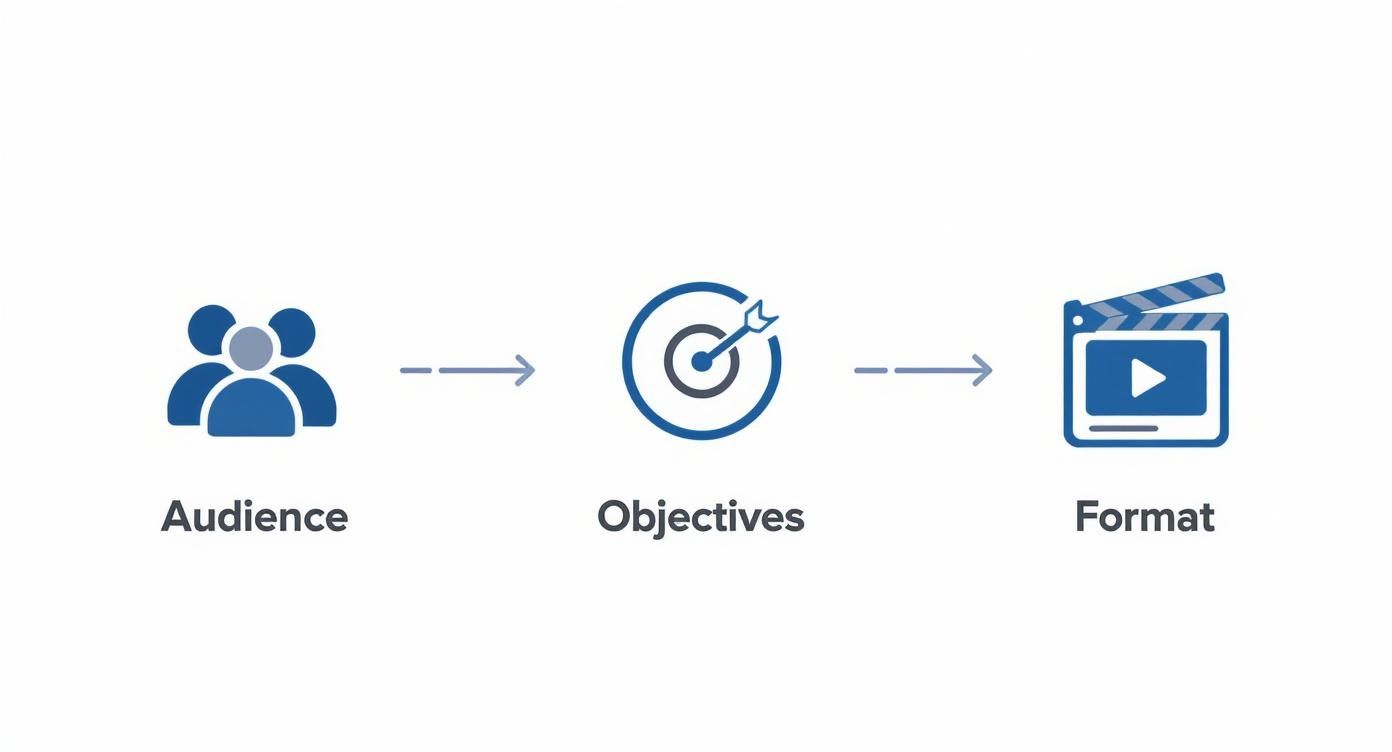
Marketing takeaway: Know Your Learner Inside and Out Before diving into your topic, consider your audience. A video for a complete beginner will differ significantly from one designed for an experienced professional seeking to refine a specific skill. Understanding your learner dictates the content’s depth and presentation style. This strengthens positioning and makes the offer more conversion-ready.
Growth move: Set Crystal-Clear Learning Objectives Once you have a clear picture of your audience, define measurable learning objectives. These simple statements articulate precisely what viewers should be able to do after watching your video, acting as a promise to your audience. Frame it with a clear value promise and measure impact with one primary KPI.
3) Choosing Your Production Path: Recording vs. AI
Marketing takeaway: Choose the Right Instructional Video Format Not all instructional videos are created equal. The format must align with the lesson. Attempting to condense a complex, multi-step process into a short clip can lead to frustration for both creator and viewer. This strengthens positioning and makes the offer more conversion-ready.
Growth move: With your foundation set, the next step is to build the actual content. A compelling instructional video relies on a strong script and a clear visual plan. Frame it with a clear value promise and measure impact with one primary KPI.
Quick win checklist:
- – How to Write a Script That Connects Your script is the blueprint.
- – Turning Your Script into a Visual Plan After scripting, create a storyboard.
- – Simple Storyboarding Methods for Everyone Your storyboard can be as detailed or.
4) Polishing Your Video: The Art and Science of Editing
Marketing takeaway: With your script and storyboard complete, it’s time to decide how to bring your video to life. This strengthens positioning and makes the offer more conversion-ready.
Growth move: The Traditional Recording Route This classic approach is often ideal for tutorials requiring a human touch, such as hands-on product demonstrations, software walkthroughs, or personalized coaching sessions. Frame it with a clear value promise and measure impact with one primary KPI.
5) Getting Your Video Ready for the World
Marketing takeaway: The AI-Powered Production Path Alternatively, AI tools, like Seeddance AI, can generate video from text prompts or still images. This method is transformative for animated explainer videos, visualizing abstract concepts, or creating custom B-roll without extensive filming or stock footage. This strengthens positioning and makes the offer more conversion-ready.
Growth move: Once your raw footage or AI-generated content is ready, editing transforms it into a polished, effective instructional video. This stage refines the pacing, clarifies the message, and enhances visual appeal. Frame it with a clear value promise and measure impact with one primary KPI.
6) Why This Topic Matters in 2026
Marketing takeaway: The final step involves preparing your video for distribution, ensuring it reaches your target audience effectively. This includes optimizing for various platforms and ensuring accessibility. This strengthens positioning and makes the offer more conversion-ready.
Growth move: Scaling content output reliably hinges on standardizing your production process. Maintain a stable structure, iterate on individual sections, and only scale what consistently performs well. Frame it with a clear value promise and measure impact with one primary KPI.
Quick win checklist:
- – 1) Can this workflow work for a solo creator? Yes. Begin with.
- – 2) How many variants should I test per post? Testing 2 to.
- – 3) Should I prioritize trends or consistency? Leverage trends for reach, but.
7) Common Production Mistakes to Avoid
Marketing takeaway: Creating effective instructional videos requires more than just hitting record. It demands a structured approach, from initial concept to final distribution. This guide outlines a practical framework for producing high-quality instructional content, emphasizing clear planning, efficient execution, and consistent publishing. This strengthens positioning and makes the offer more conversion-ready.
Growth move: A truly great instructional video is a carefully planned learning experience, much like constructing a house requires a solid blueprint. This foundational stage ensures your video is purposeful and effective. Frame it with a clear value promise and measure impact with one primary KPI.
Campaign Launch Checklist
1. Define one audience segment, one core offer, and one conversion KPI.
2. Build the first draft fast, then optimize only high-impact weak blocks.
3. Validate hook clarity, retention pacing, and CTA visibility before publish.
4. Store winning prompts, references, and variants for repeatable growth.
Marketing Takeaway
Winning content scales when every revision is tied to pipeline metrics. Keep the message clear, the creative system modular, and the CTA outcome-driven so each new post compounds traffic, trust, and conversion.
Additional Insight 1
Campaign opportunity: Know Your Learner Inside and Out Before diving into your topic, consider your audience. A video for a complete beginner will differ significantly from one designed for an experienced professional seeking to refine a specific skill. Understanding your learner dictates the content’s depth and presentation style.
Conversion play: Set Crystal-Clear Learning Objectives Once you have a clear picture of your audience, define measurable learning objectives. These simple statements articulate precisely what viewers should be able to do after watching your video, acting as a promise to your audience.
Additional Insight 2
Campaign opportunity: Choose the Right Instructional Video Format Not all instructional videos are created equal. The format must align with the lesson. Attempting to condense a complex, multi-step process into a short clip can lead to frustration for both creator and viewer.
Conversion play: With your foundation set, the next step is to build the actual content. A compelling instructional video relies on a strong script and a clear visual plan.
Additional Insight 3
Campaign opportunity: How to Write a Script That Connects Your script is the blueprint for the entire learning experience. Write for the ear, ensuring it sounds natural and conversational when read aloud. This makes the content more engaging and easier to follow.
Conversion play: Turning Your Script into a Visual Plan After scripting, create a storyboard. This involves mapping out the visuals that will accompany your narration. You don’t need artistic skills; simple sketches or descriptions are sufficient to create a visual reference for your production.