
What Makes a Magnetic Charging Cable Different From a Traditional USB Cable?
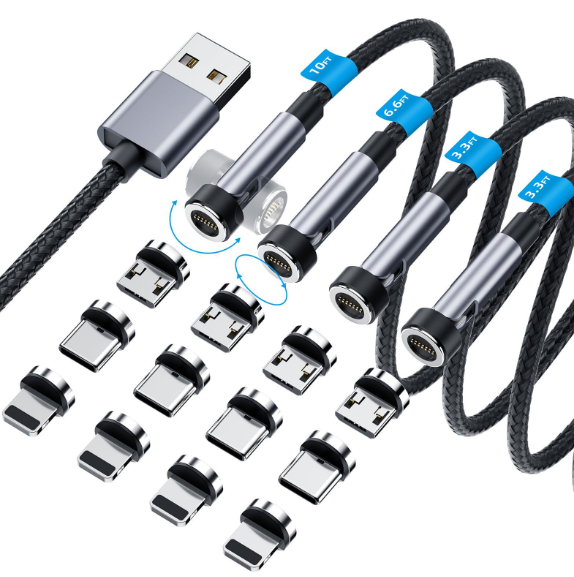


Many of us use USB cables almost daily without having any major thoughts about the way the cable connects and, in return, the power source. However, it turns out that not all charging cables have the same functionality. A magnetic charging cable looks different from others because it has a magnetic point that not only connects easily but also disconnects the cable smoothly.
This is a small change that impacts the ease of use, speed, and longevity. With a comprehension of what makes magnetic and traditional USB cables unique, one will be able to make an informed choice between the two for usage. The differences, though minor, are impactful.
Magnetic cables are assisted by the inclusion of a magnetic tip, which stays on the device port.
A magnetic cable for charging comes with a small metal tip that will remain inserted into a device’s port during its use. The cable will connect to this tip by its head, and these two parts use magnets for instant connection without any pushing or pulling, which can contribute to possible wear.
In situations like driving or working at a desk, a quick one-handed connection is made easier with a slim magnetic charging cable, allowing users to snap it on or off without needing to search for the correct fit. The magnetic link also helps prevent drops if someone trips over the cord.
Many cables boast a nylon braiding outer layer for longer life and have a smooth feel. Some models include a rotatable head or multiple adapter tips for different devices. It’s minor upgrades, making magnetic cables a more practical alternative to traditional USB cords while keeping charging simple and neat.
Traditional USB cables plug directly into the device without any magnetic attachment
The traditional type of USB cable has a fixed plug that inserts directly into the charging and data connection port of the device. One has to properly align the plug and the port before inserting the plug to have a solid connection. This has been the traditional type of USB connection for a long time.
This is a result of the connector fitting snugly in the port, which might cause it to wear over time due to the frequent use and removal from the ports. The friction from the insertion or removal might also cause more stress on the ports and the cable, thus the impact of the cable on its durability.
Traditional cables have an ability to transfer both power and data using a physical contact method over wires. They can connect devices using various connector styles such as USB-A, USB-B, or USB-C connectors, each designed to accomplish a unique function. Although this method is functional for most users, it does not provide the ease currently attained by using magnets.
Magnetic cables reduce wear and tear on device ports by minimizing repeated physical insertion and removal
In a magnetic charging cable, the detachable connector stays inside the device’s port. In the cable, on the other hand, the connector connects through a small magnet, and the user need not attach or detach the cable every time it is to be used, thus reducing the physical stress that results from repeated insertion and detaching, which happens with traditional USB cables.
Over time, the constant plugging can cause the connection pins to get dislodged or the charging port to get distorted. The use of a magnetic connector makes the charging port last longer, given that its use reduces friction and pressure on the charger.
This configuration can also safeguard the device from getting jerked by some force. The magnetic connection is designed so that if there is some force applied, it can part ways quickly. This prevents the cable from either bending or breaking. Magnetic cables provide a more efficient way of charging a device without having to cause any harm to it.
Traditional USB cables generally provide faster charging due to direct wired connections with lower resistance
Also, regular USB cables have the advantage of recharging the batteries of devices quicker than the new technology. The USB cable has the capacity to recharge the devices totally because the metals in the connector make a proper connection that eliminates any form of loss in the transfer of electricity to the devices.
Magnetic cables, on the other hand, use a number of contact points that are pressed together by a magnet. This can cause some form of gap, thus more resistance in the flow of current. The more resistance, the more it can draw heat.
In addition to that, traditional USB cables tend to support high power ratings as well. It is designed to carry high current ratings without heat damage or interruption. It indicates that devices tend to charge faster as they get connected to plug types that also carry similar quick charging capabilities.
Magnetic cables offer improved convenience and quick attachment, especially in low-light or one-handed scenarios
Magnetic cables contain magnetic connectors that, when snapped into place, don’t necessarily require alignment. This has made it possible for a user to attach a cable easily, even when he or she does not get a clear sight of the connector port. The magnets help the ends meet easily, reducing the effort required when attaching a device.
This feature becomes apparent when the lighting conditions are dim. One will not have to fumble about to locate an opening to connect the cable. The cable will almost instantly connect to the cable when held closely, thus preventing strains that result from constant and forceful connecting.
Magnets are also convenient for using with one hand: drivers, travelers, and anyone who must multitime use will appreciate how easily they can connect or disconnect their cable with a small motion. They will hold securely enough for normal use, yet will also safely disconnect if yanked or pulled suddenly and abruptly.
Conclusion
One can note that magnetic charging cables are quite distinct from ordinary USB charging cables because they have a high-speed snap-on connection that minimizes friction with the ports. The magnetic charging point remains attached to the devices, which can help in reducing wear and physical strain over a long period of time.
Often, they enable the quick delivery of power and offer data transfer speeds comparable to standard USB cables. Some have additional conveniences such as the use of LED lights and rotating heads, which can be useful at night.
However, the quality of performance depends upon materials, strength of magnetism, and compatibility with other equipment. One should check the power ratings and connect types prior to purchase.
Thus, magnetic cables are useful as they are easily attachable, cause less stress on the ports, and result in neater cables, all without sacrificing the efficiency of the traditional USB cables.